Due to its large size and mass Jupiter has the highest frequency of impacts. Despite this, many are small or go by unnoticed.
The answer to this question depends on both the movements of astronomical bodies and the observations of humans.
This question will solve YES if before 1st of April 2024 UTC a Jupiter impact is recorded.
 1,000
1,000🏅 Top traders
| # | Trader | Total profit |
|---|---|---|
| 1 | Ṁ534 | |
| 2 | Ṁ88 | |
| 3 | Ṁ85 | |
| 4 | Ṁ83 | |
| 5 | Ṁ38 |
People are also trading
Observed impacts are more common closer to when Jupiter is near opposition, probably because Jupiter is in the sky more of the night and closer. I made a histogram of observed impacts since 2009 by days away from opposition:
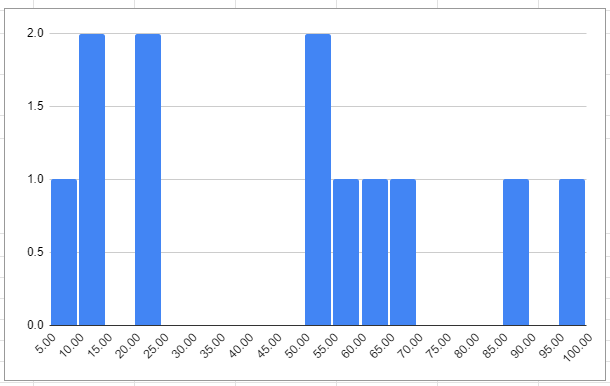
Oppositions are ~400 days apart, so you can be up to 200 days from one, but all observations were within 100. The last opposition was on November 3, so as of December 20, we are 47 days from opposition. I'd guess we're 3/4 though the observation probability density for this opposition. In the last nine oppositions (including this one so far) there have been eight observed impacts, for .89 per opposition, but since the rate we detect them may be increasing given the two this year, maybe 1.2 per opposition. 1.2 per opposition times 25% of the cycle left is 0.3 impact observations left this opposition-adjacent period. If we do see an impact, it should be in the next two months given the pattern of prior observations.
@TimDuffy Technically once they hit they're both meteors, as long as it causes a noticeable impact anything counts.
@EstMtz Here's a list of past events: https://en.wikipedia.org/wiki/Impact_events_on_Jupiter#Impact_events