Resolution criteria
This market resolves to YES if, during the target calendar day (defined as the calendar day immediately following the creation of this market, from 00:00:00 to 23:59:59 UTC), either of the following occurs:
A space object (meteoroid/asteroid fragment) is confirmed by reputable scientific organizations (such as NASA, ESA, or the Meteoritical Society) to have survived atmospheric entry and physically struck the Earth's surface (land or water) as a meteorite.
A bolide or fireball event occurring on that day is recorded in the NASA JPL CNEOS Fireball Database with a calculated total impact energy of 0.1 kilotons (kt) of TNT or greater.
This market resolves to NO if neither of the above events is officially confirmed or recorded for the specified calendar day.
Note: Standard "shooting stars" or minor meteors that burn up entirely in the atmosphere without leaving confirmed physical meteorites on the ground or meeting the 0.1 kt CNEOS energy threshold will not trigger a YES resolution. If a potential impact occurs but scientific verification is delayed, the market resolution may be extended by up to 7 days to allow official reporting to confirm the event.
Background
Every day, Earth is bombarded by over 100 tons of cosmic dust and sand-sized particles. Virtually all of this material burns up entirely in the upper atmosphere. Larger objects, ranging from the size of a pebble to a boulder, enter the atmosphere regularly and can create exceptionally bright flashes of light known as fireballs or bolides.
For a space rock to survive atmospheric entry and reach the ground as a meteorite, it must be sufficiently large and composed of durable materials (like iron or dense stone). NASA's Center for Near-Earth Object Studies (CNEOS) tracks larger atmospheric impact events using government sensors. A calculated total impact energy of 0.1 kt of TNT serves as a reliable threshold for a notable atmospheric explosion, though it is still much smaller than historically damaging events like the 2013 Chelyabinsk meteor (estimated at ~440 kt).
This description was generated by AI. Review and verify everything here yourself. You can edit, replace, or delete any part of this description, including the resolution criteria. You do not need to trust the AI output.
 1,000
1,000People are also trading
@holidayinn They added a bolide on 21st of July, so it is safe to say the list is up to date. This can resolve
It seems that at least in the NASA bolide list there is an empty space between 28th June and 30th June. Can likely resolve NO, @holidayinn
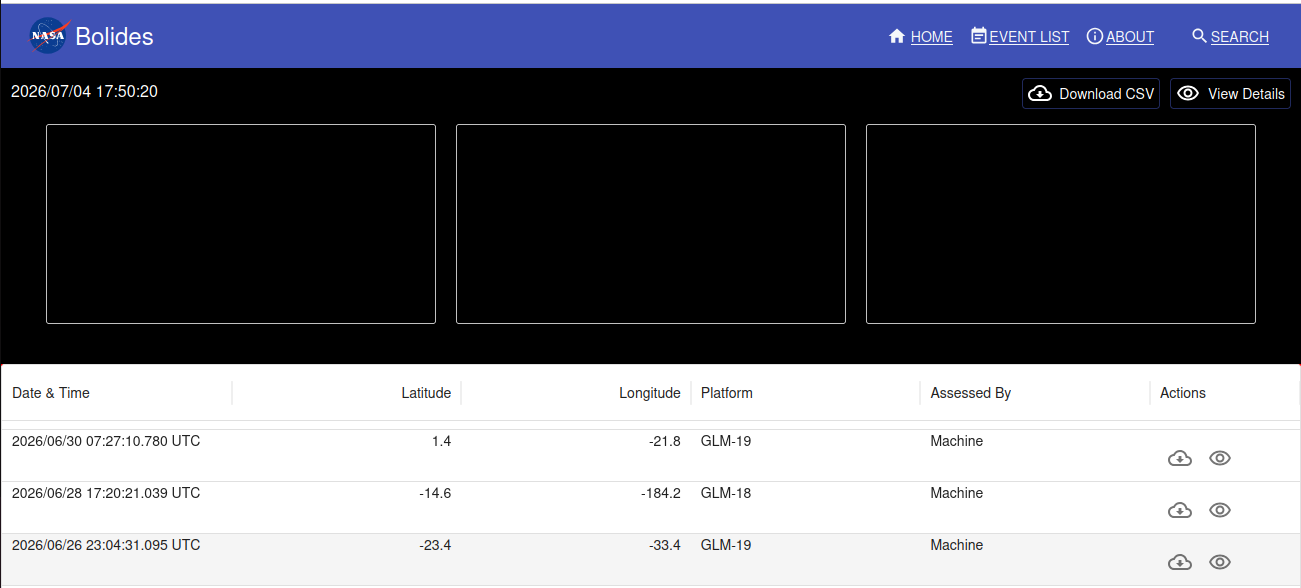
@holidayinn Just to update that the data is only updated to Friday the 26th. Maybe they only do it once a week.
Might I strongly suggest that you not be hasty in resolving NO. It seems the linked in description resolution source's last entry is three weeks back. Unless you know they will genuinely be up to date within 7 days, I posit it harms nothing to wait for more confidence there was nothing. @holidayinn
@JussiVilleHeiskanen seems my other comment has vanished, but their source of raw data works with a ten day delay apparently.