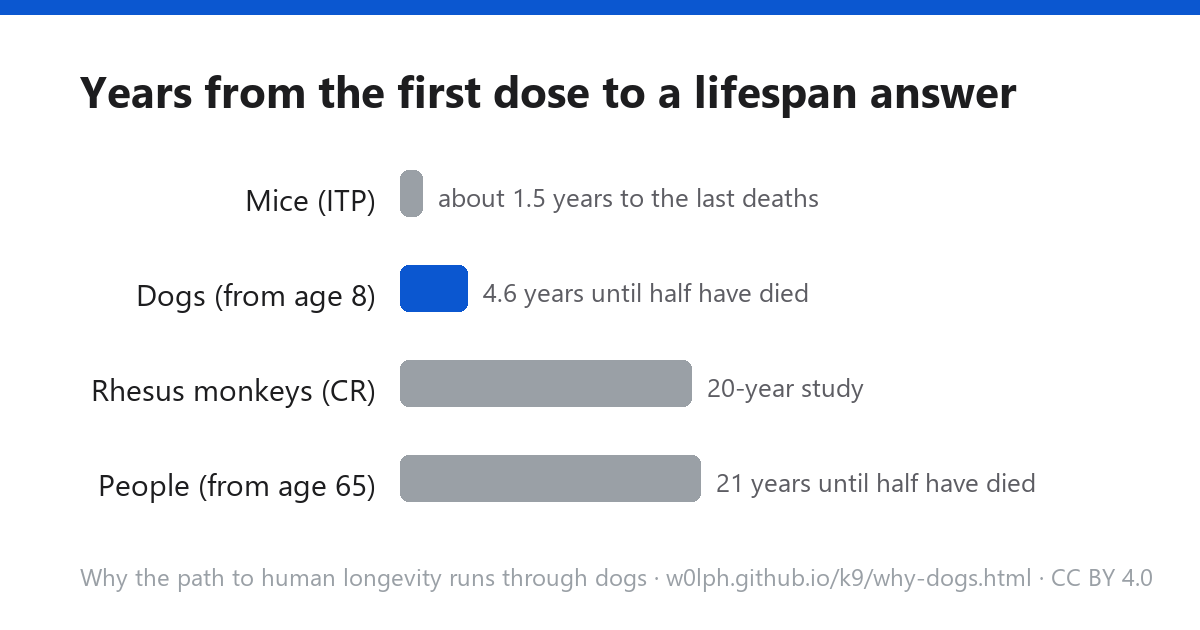
Resolves YES if, before January 1, 2030, a record on ClinicalTrials.gov describes a randomized, controlled, interventional trial of a drug or biologic in humans whose stated purpose is to slow or counter aging (the record's title, brief summary, or condition field refers to aging, biological aging, lifespan, healthspan, or geroscience rather than a single disease) and whose primary outcome measure is all-cause mortality, survival, or lifespan. Trials in a single disease population with mortality endpoints (for example heart failure) do not count; composite disease-onset endpoints (as planned for TAME) do not count. Otherwise NO. Background: Human trials of putative anti-aging drugs have used surrogate or composite endpoints; the proposed TAME trial of metformin targets a composite of age-related diseases (Barzilai et al., Cell Metabolism 2016). Life-table arithmetic shows why: half of a cohort enrolled at 65 is still alive about 21 years later (WHO life tables, USA 2019), versus about 4.6 years for dogs enrolled at 8 (Teng et al., Scientific Reports 2022). Companion question: Will the TRIAD trial report that rapamycin significantly extended lifespan in dogs by December 31, 2031? Sources: https://doi.org/10.1016/j.cmet.2016.05.011 https://clinicaltrials.gov/ https://w0lph.github.io/k9/why-dogs.html /w0lph/will-the-triad-trial-report-that-ra
 1,000
1,000For calibration: detecting a 10% lifespan extension at 80% power over four years takes about 2,100 people enrolled at 65, against about 1,400 dogs enrolled at 8, and the people are still about 17 years from a median-lifespan readout. Calculator with the assumptions stated: https://w0lph.github.io/k9/why-dogs.html?v=2