I don't smoke, I don't abuse drugs, and I rarely drink (~twice per month).
I sport at least 180 minutes per week (primarily aerobic exercise), sometimes much more.
I eat a healthy diet (for American standards) with lots of vegetables and not a lot of meat. No sugar.
I am currently very content with my life, including my social and romantic life.
I rarely feel stressed (~once per week slightly stressed).
Close date updated to 2202-01-31 12:00 am
 1,000
1,000People are also trading
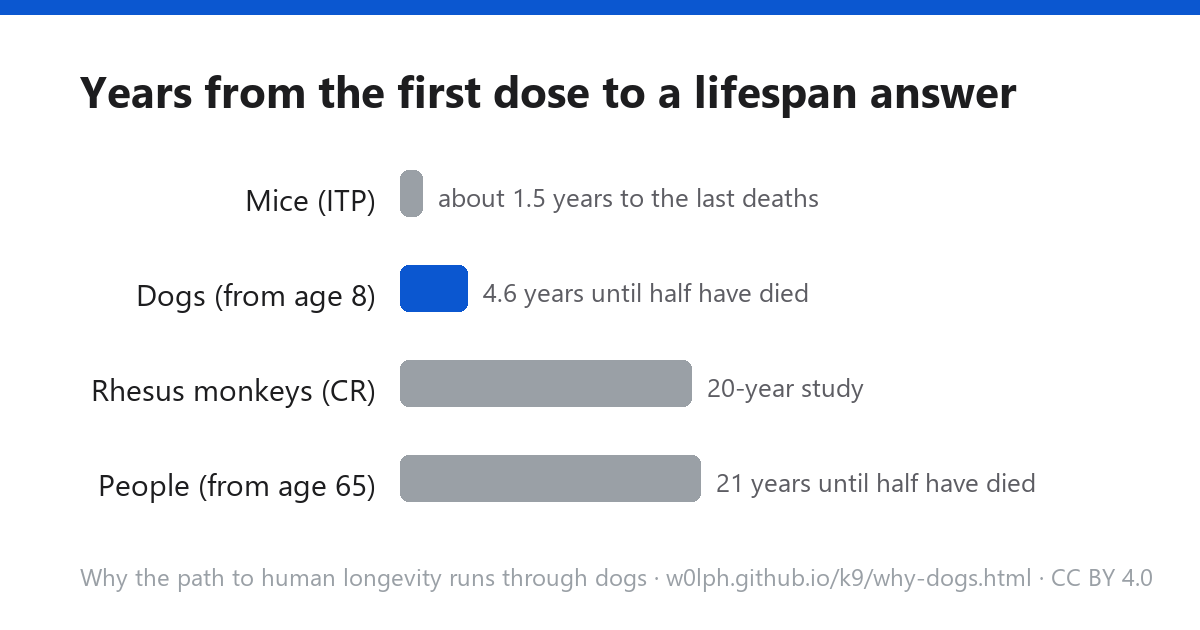
What the lifestyle in the description buys, in numbers, and what it does not. Not smoking, exercising and keeping stress low moves you to the favourable end of today's tables, worth roughly a decade: the gap between the richest and poorest 1% of US men is about 15 years at age 40 (Chetty et al., JAMA 2016), and never-smokers outlive smokers by about 10. It does not change the shape of the curve: past 105 the annual probability of death flattens at about 50% (Barbi et al., Science 2018), the verified record is 122 years and 164 days, and on the SSA 2023 period table 2 of 100,000 US men reach 110. So 200 needs the age-related rise in mortality removed, which no intervention has done in any mammal; the best replicated drug effect (rapamycin in the NIA mouse program) is 23 to 26% more median lifespan with the hazard still climbing. The clocks for finding out are fixed: the first lifespan trials of anti-aging drugs in a species that lives with us, dogs, read out around 2029 to 2031, and human lifespan trials take about 21 years from enrolment at 65. The arithmetic with sources (mine): https://w0lph.github.io/k9/why-dogs.html?v=2
@JimHays Can't, this is one of the markets that's bugged and can only be added to a list of 6 different groups.