
MANIFOLD
Will 1,3-butanediol significantly extend the lifespan of UM-HET3 mice tested by the NIA’s Interventions Testing Program? (Cohort 13: C2017)
10
Ṁ1kṀ235
2032
32%
chance
...treatments that can decelerate the rate of aging are the only available path to significantly increase human lifespan going forward. Before drugs and treatments can be considered for larger clinical studies in humans, pilot trials in rodents must be performed as a necessary prerequisite. This is why the National Institute on Aging established the Interventions Testing Program which “is a multi-institutional study investigating treatments with the potential to extend lifespan and delay disease and dysfunction in mice”. So far it is the largest systematic effort to test potentially life-extending compounds in mice that has been performed. This is an attempt to give the biogerontology community, interested experts and laypeople an opportunity to predict outcomes of this important experiment. See also: http://biogerontolgy.blogspot.com/2022/02/a-prediction-market-for-nias-mouse.html
Get
Ṁ1,000
to start trading!
Sort by:

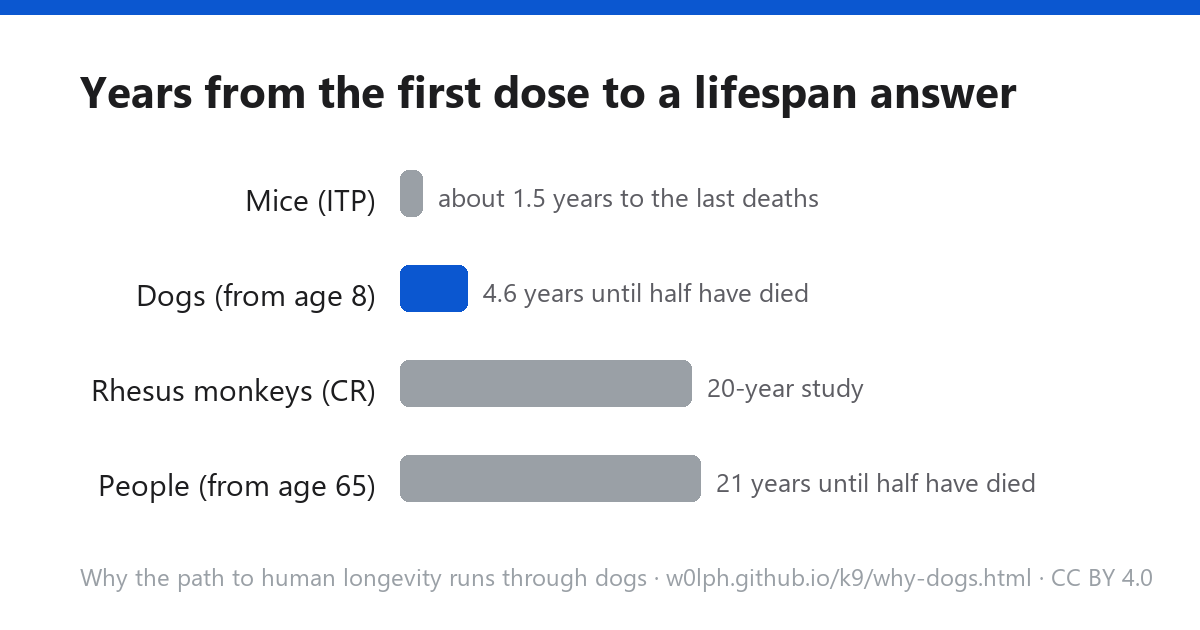
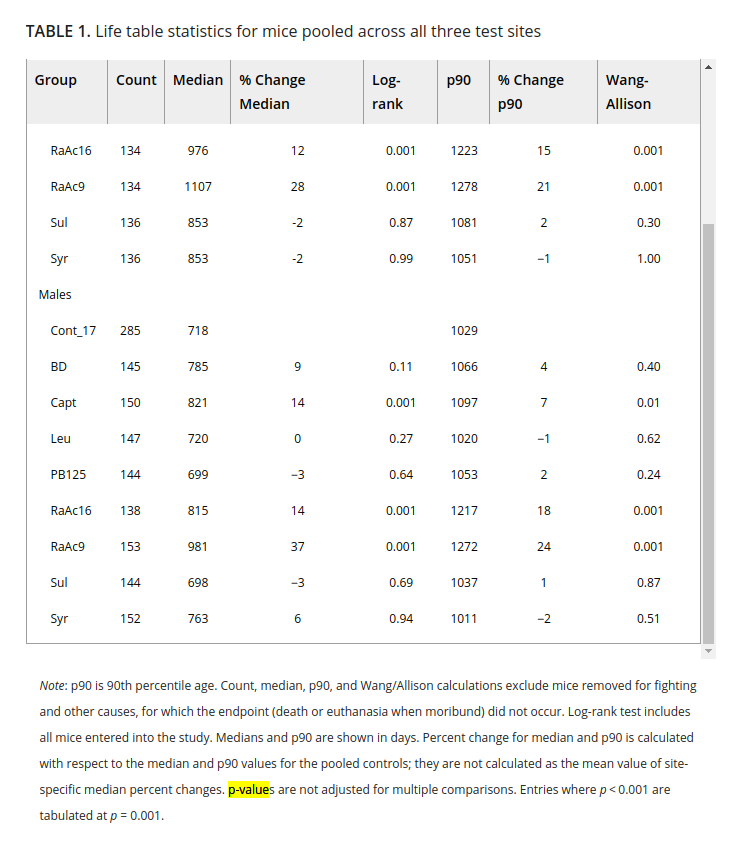
Published answer for this one too: Strong et al. 2022, Aging Cell (doi 10.1111/acel.13724), the C2017 cohort paper. (R/S)-1,3-butanediol at 100,000 ppm from 6 months gave a 2% increase in female median lifespan (p = 0.04) only when the site with unusually short-lived controls was included; the two-site analysis showed 0%, there was no effect in males, and no change at the 90th percentile. The abstract's own wording is that BD "seemed to produce a small (2%) increase in females, but only if the analysis included data from the site with unusually short-lived controls", which reads as NO under a strict significance standard, unlike captopril in the same cohort (females +6%, p = 0.002; males +14%, p = 0.001, pooled). Every ITP row by compound, dose, sex and significance, with the dog-equivalent dose next to it (mine): https://w0lph.github.io/k9/why-dogs.html?v=2
predictedNO

Recommending "No".