Will have to adjust resolve date based on when CDC releases the data. If the rate decreases while all the products are pulled from market, or not sold in a reasonable quantity, it won't count.
 1,000
People are also trading
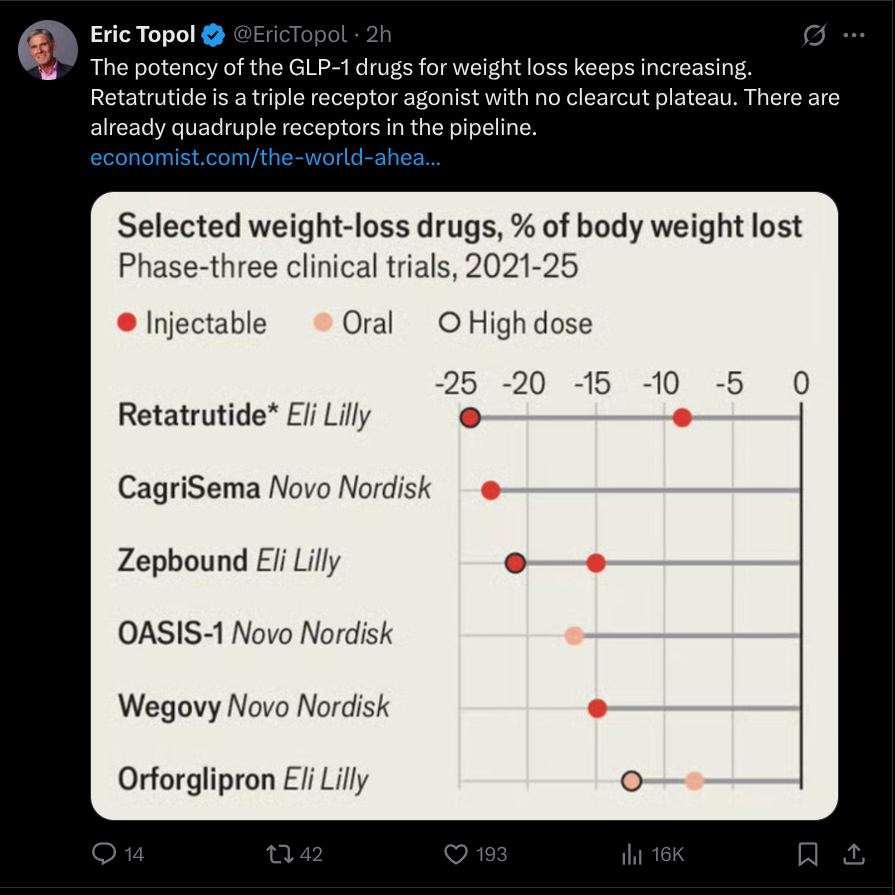
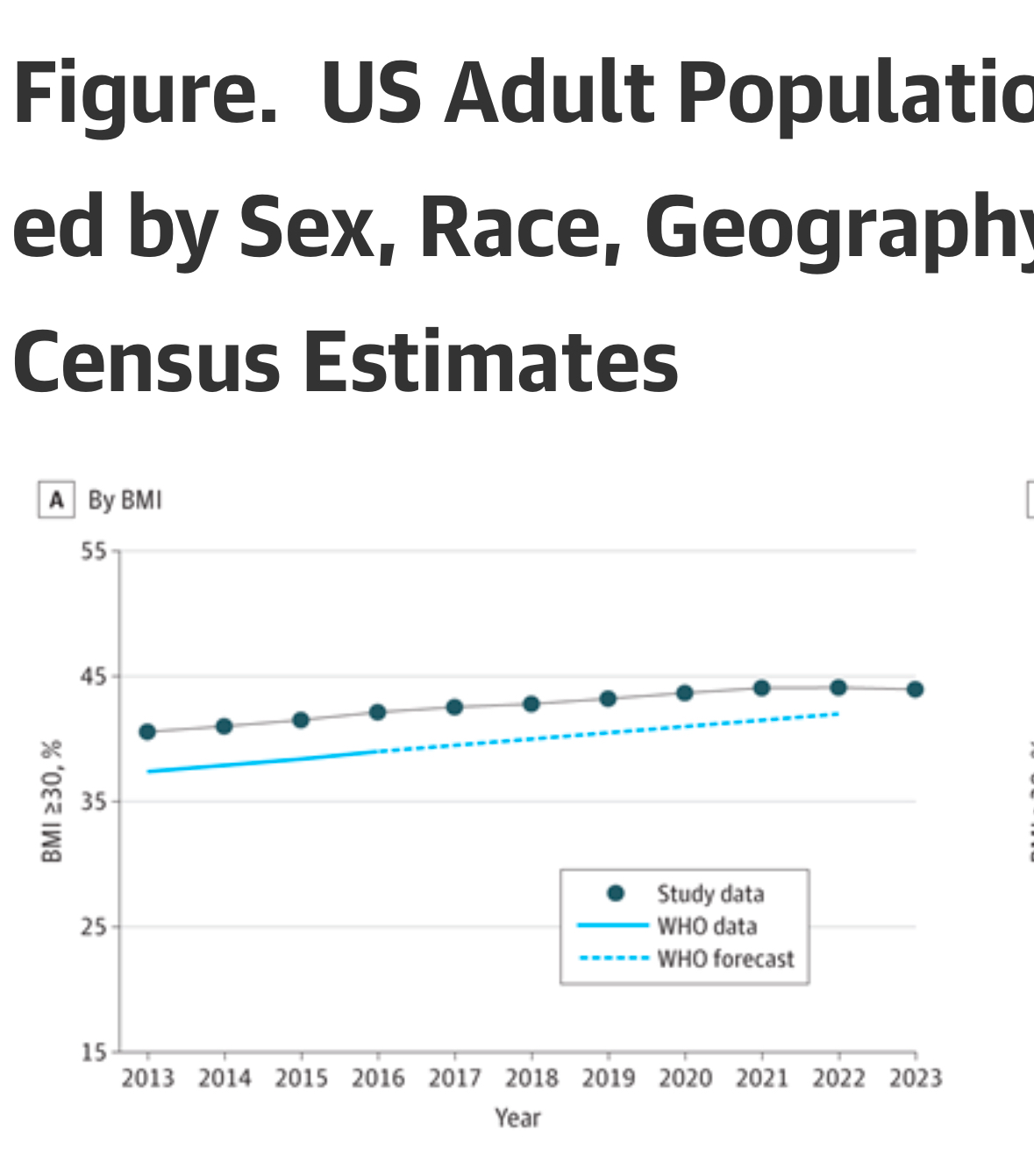
Where the CDC series stands: adult obesity was 41.9% in the 2017 to March 2020 NHANES cycle and 40.3% in August 2021 to August 2023 (data brief 508), a dip the CDC reports as not statistically significant, with severe obesity still rising (9.4%). That 2021 to 2023 window only caught the very start of mass GLP-1 use; KFF's tracking poll had 6% of adults on one in mid-2024 and 12% by November 2025, so the first cycle that can show the drugs' population effect is 2023 to 2025, due around 2026 to 2027, which is exactly the one this market will resolve on. A "stop or reverse" reading therefore needs that cycle to print at or below 40.3% with the products still on the market, which the uptake numbers make plausible. One footnote for the longer run: the same drugs are now in an ARPA-H-funded aging trial (VITAL-H, semaglutide arm, 726 adults aged 60 to 65), and whether any drug ever gets an aging indication is tracked here (mine): /w0lph/will-the-fda-approve-any-drug-for-a