#manifold #features #tags #boost #resolvesYES
 1,000
1,000🏅 Top traders
| # | Trader | Total profit |
|---|---|---|
| 1 | Ṁ188 | |
| 2 | Ṁ144 | |
| 3 | Ṁ130 | |
| 4 | Ṁ22 | |
| 5 | Ṁ13 |
@MartinRandall Of course not, I’m happy to provide clarification. And I agree, the market shouldn’t have been so horrendously underspecified! i will fix that now.
Basically, topic tags are used for categorizing and making content discoverable by the manifold algorithm for the users. OTOH, groups are created by the community, for the community, for curating content across topics. Often times, groups are used as topics, but that doesnt have to be the case.
You could today create a group called “Basketball” and it doesn’t have to do anything with basketball! Or a group called “timelines" which is just a group about personal goal timelines! And that’s just fine. But it is bad from the perspective of serving content to users in their home feeds, for which topic categorization, or tags would serve better.
As Jack has mentioned in the comments below, the current system of using groups as tags works just fine for the larger groups such as “AI”, “politics” etc (where basically anyone can add markets to the group), but fails when you consider niche topics.
One way to solve this is to just have a better group management system, which seems to be the easier solution to implement for manifold at this point. Another is to separate out what topics and groups are supposed to mean- tags are representations of topics, and groups would be more akin to a "list" on twitter, for example. In my opinion, this would be the better solution for if/when manifold has a larger userbase and a lot more markets in niche topics.
Hahahaha okay I see some tags in the feed but notice that upon clicking them, they take you to the groups. I'm not sure if this is anything more than just a visual change, but I'm happy to hear arguments for whether this should count.
My current stance is that this doesn't count, its still groups. To me it feels like a reskinning of groups only, not introduction of tags but I'd like to hear if there's any arguments for whether this counts. I'm selling my position in the market (at a loss) because eventually I'll have to make a decision and i don't wanna have a bias even if subconscious.
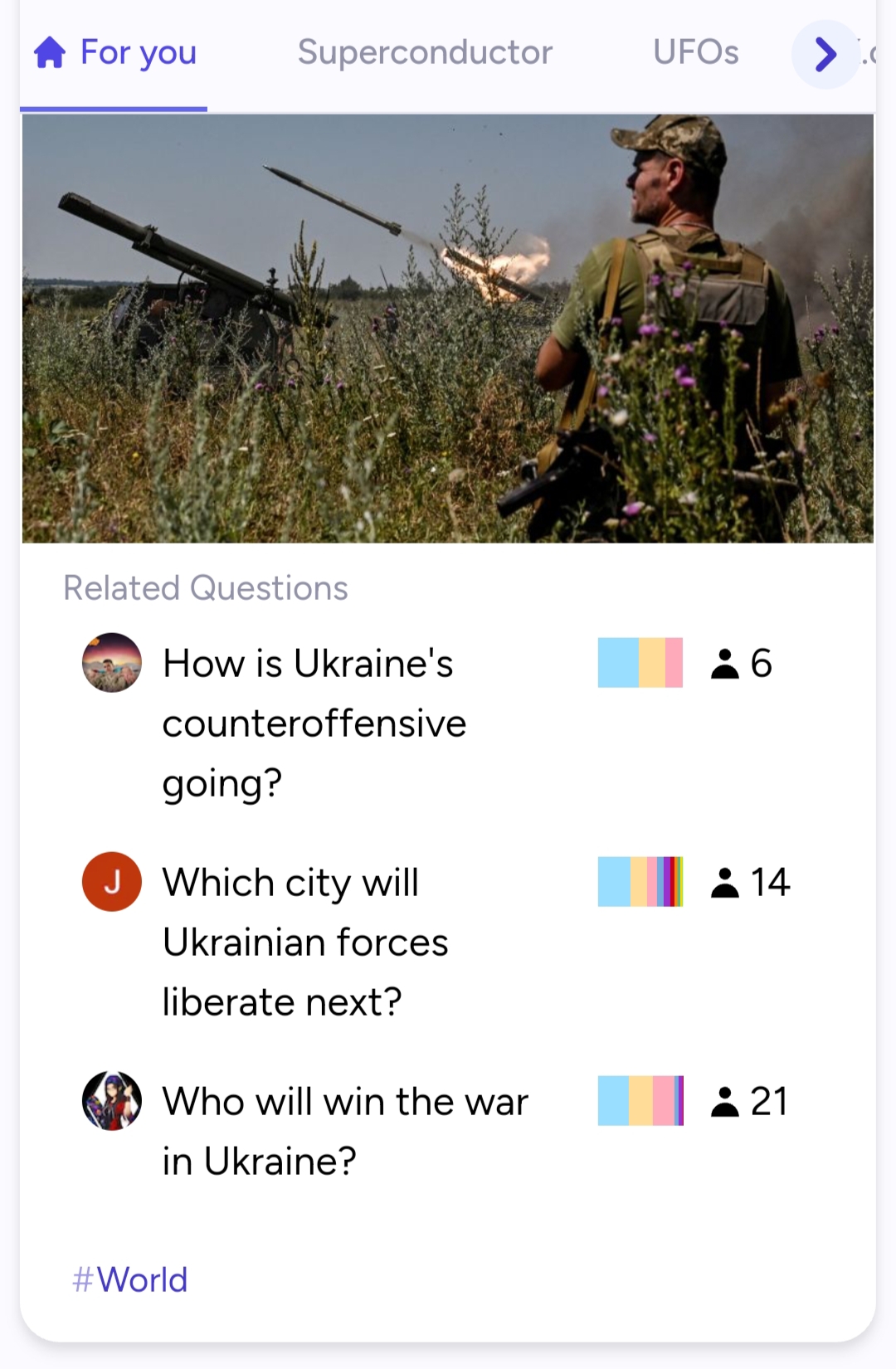
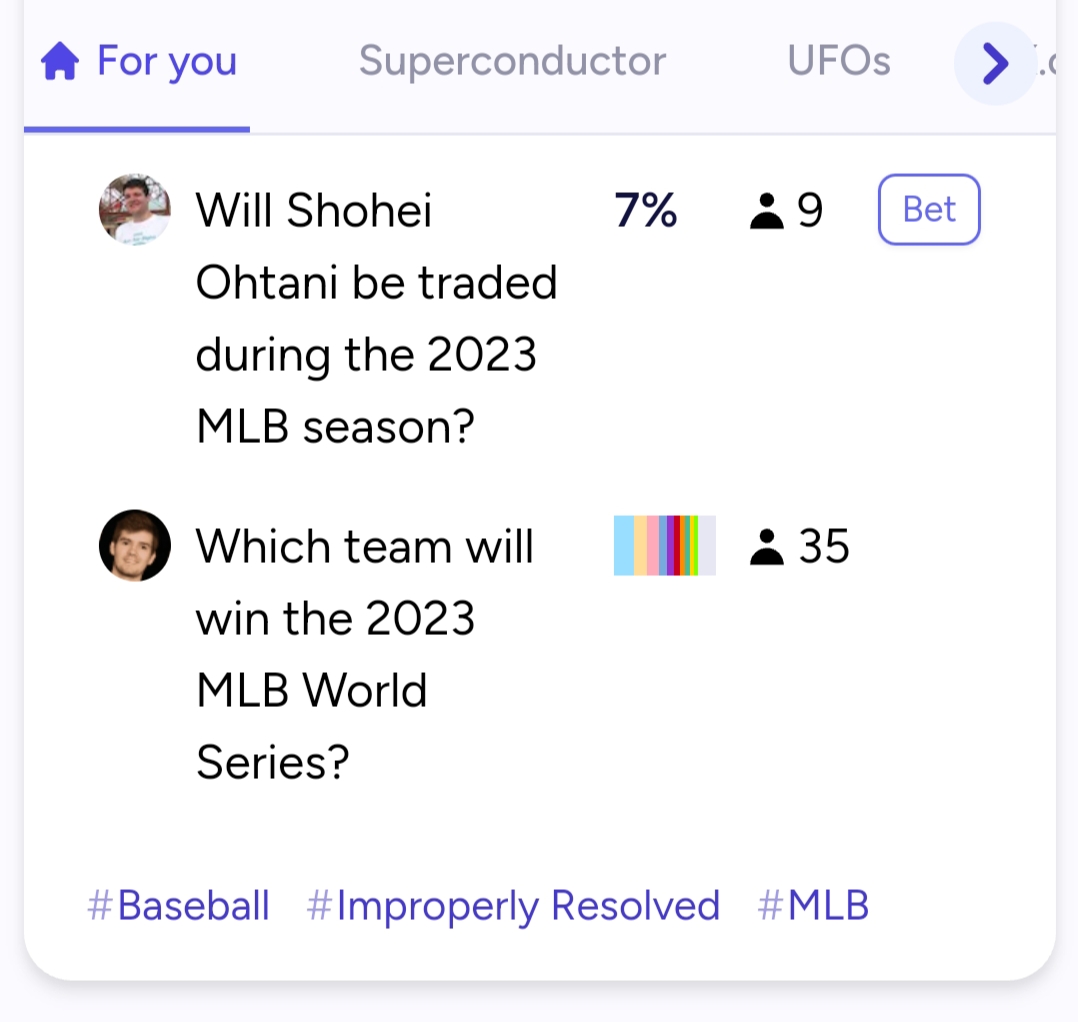
@jack That’s weird. So it doesn’t link us to #Baseball. Hm. If it did, I think there would be an argument for it counting.
I agree that groups are a bit too high friction to be the default categorization method for markets. Could maybe introduce tags and build outward from them. Still believe in subreddit-style groups, but right now the userbase is too small for them to feel like a community. Tags could lower the friction around clustering users.
@firstuserhere Yes, tags were a predecessor to groups. At first, groups were basically just tags too, but they evolved over time.
@jack oh wow, interesting. The reason I proposed this market is because there are certain topics that I'd like to search and get markets for, in one place, but there are several groups for. Many have just a few markets or just a few members (1-2 mostly) that would be better served if there was a single tag aggregating all the markets of that type, and then the groups would be for "curating" markets across many different tags. The current group system also does it to some extent, but the presence of so many tiny groups with no one place for all the questions for a topic, especially when its a niche one, makes it harder to find questions
@firstuserhere Yeah, although that was a problem with earlier versions of tags and groups too - what is probably needed is a better tag/group organization system where some mods can merge duplicate groups and stuff like that.
@jack I have a fine time just using groups as tags anyway. e.g. https://manifold.markets/group/pickleball

@StrayClimb So do I for the most part but I expect a new user to have some trouble with it
@firstuserhere I've heard several people being hesitant to create a group, for example, lol
@Stralor Groups are better suited for aggregating markets by users, but these tags are better suited for aggregating markets by manifold.
A group has a leaderboard and a curated collection of markets and is more "personal' but site-wide tags are more useful when it comes to recommending content to users. Groups are clunky in that regard. Most groups have what? <5 members
@firstuserhere this doesn't seem like a precise difference. I want tags to have leaderboards too! One difference is that group membership can be controlled
Groups that are open for anyone to add markets to are basically tags. That's how groups started (and in fact how tags worked before groups). One problem with this was that people were constantly mis-tagging/mis-grouping things. This is a solvable problem with better group/tag management features. I don't think the differences between tags vs groups are the key difference here.
@jack portfolios or (hopefully eventually introduced) dashboards also solve similar problems