AGI is currently generally expected to appear some time in 2030s: /ManifoldAI/agi-when-resolves-to-the-year-in-wh-d5c5ad8e4708
I would like to explore whether AGI will have any significant effect on longevity research and if no, then why.
Here are some definitions of things mentioned in the options:
AGI — and AI system, capable of autonomously doing any tasks involved in scientific research (since this question is about research)
Significant advances in longevity — increasing the life-expectancy at birth by at least 2x, to at least 160 years.
Whether AGI is used in longevity research — yes if some notable papers in the field are fully written by AI or some procedures are fully developed by AI. Domain specific AIs used for e.g. protein folding are not enough.
Human-like level of capabilities — the most complex high-level intellectual tasks done by AI can also be done by humans in no more than 10x amount of time it takes AI to do it.
Unfriendly/unaligned AGI — the actions of out-of-control AI lead to at least the state of national emergency in at least one country and result in significant slowdown in AI development either due to the regulations introduced as a result, or due to all or many AI researchers being dead.
The options in the question are not mutually exclusive.
I do not bet on my own questions.
Update 2026-10-02 (PST) (AI summary of creator comment): - The definition of significant advances in longevity is updated: this will resolve to YES if there is a consensus in 2040 that a baby born in 2040 has at least a 50% chance to live to 160, given the 2040 level of medical care throughout their life.
 1,000
1,000People are also trading
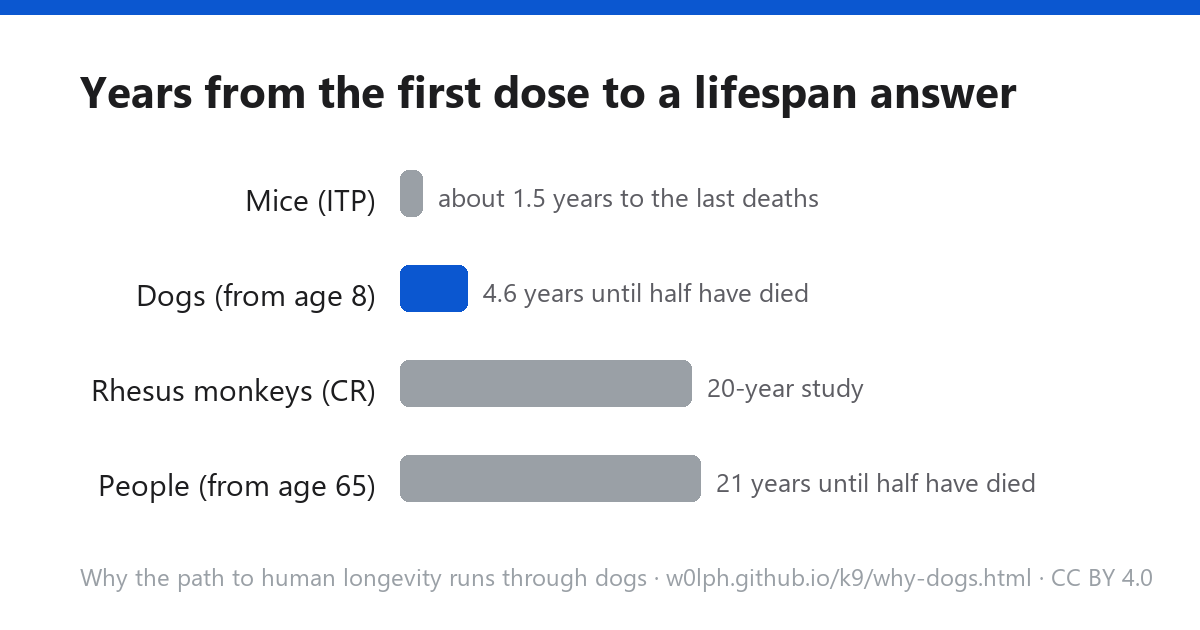
A measurement point for the "significant advances" option (life expectancy at birth of at least 160 by 2040): period life expectancy is computed from one year's death rates at every age, so it only moves as deaths actually fall. The US figure for 2024 is 79.0 years (CDC, January 2026) and no national figure is above 90. Doubling by 2040 would need mortality at every age to collapse within 14 years, not just a discovery. Even if an AGI found the right drug in 2030, the human evidence would lag: a cohort enrolled at 65 reaches median survival about 21 years later. The fastest readout in a mammal that shares our environment is the dog, about 4.6 years from age 8, which is why the lifespan trials of anti-aging drugs now running are in dogs. The arithmetic with sources (mine): https://w0lph.github.io/k9/why-dogs.html?v=2
@w0lph The way life expectance is calculated is a bit hairy, so I'll accept as "significant advance" a situation in which there is a consensus that a baby born in 2040 has 50% chances to live to 160, given the 2040 level of medical care throughout their life.
@ahalekelly It is a multiple-choice market, though I tried to make different options mostly complementary to each other.