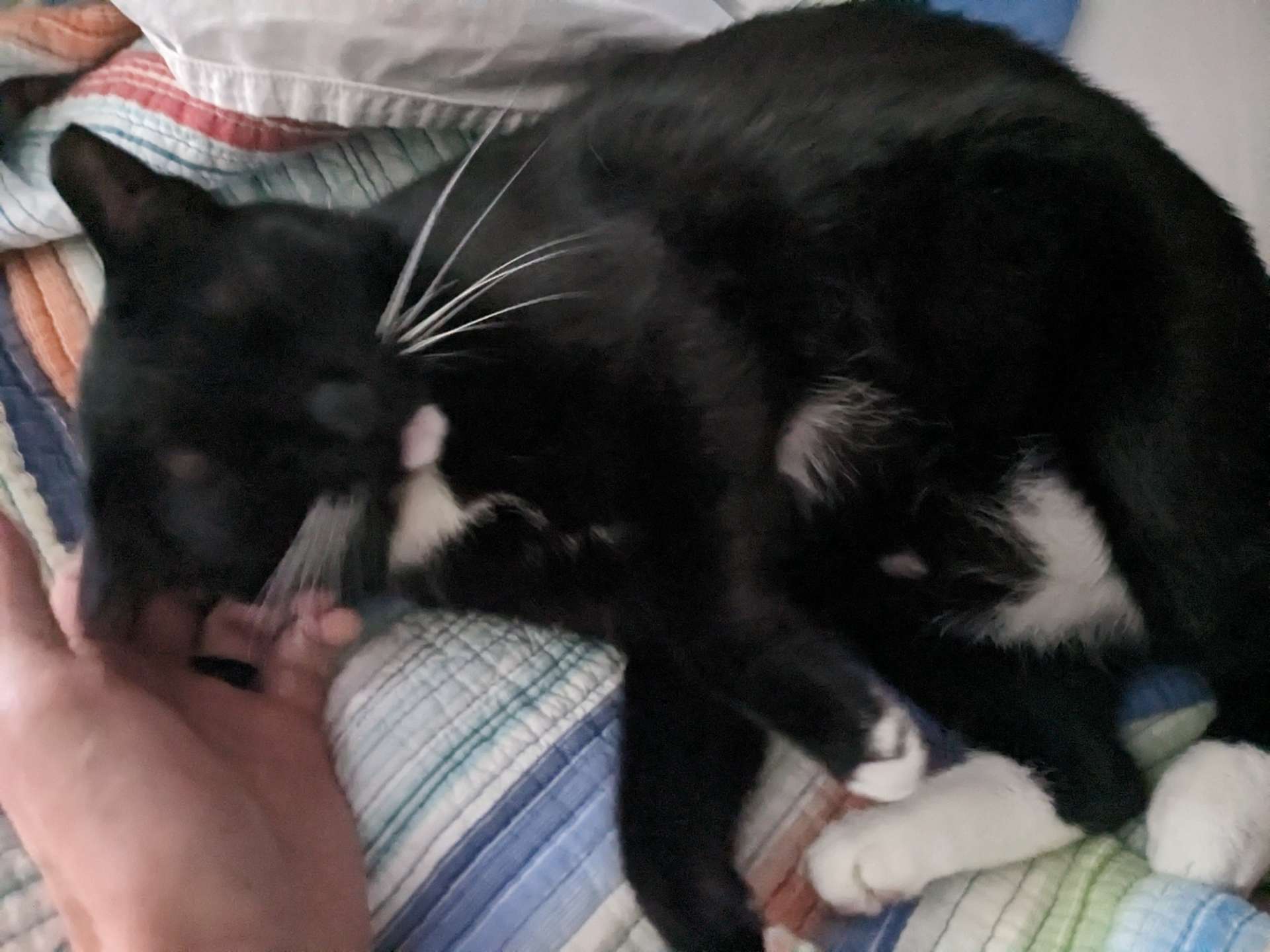
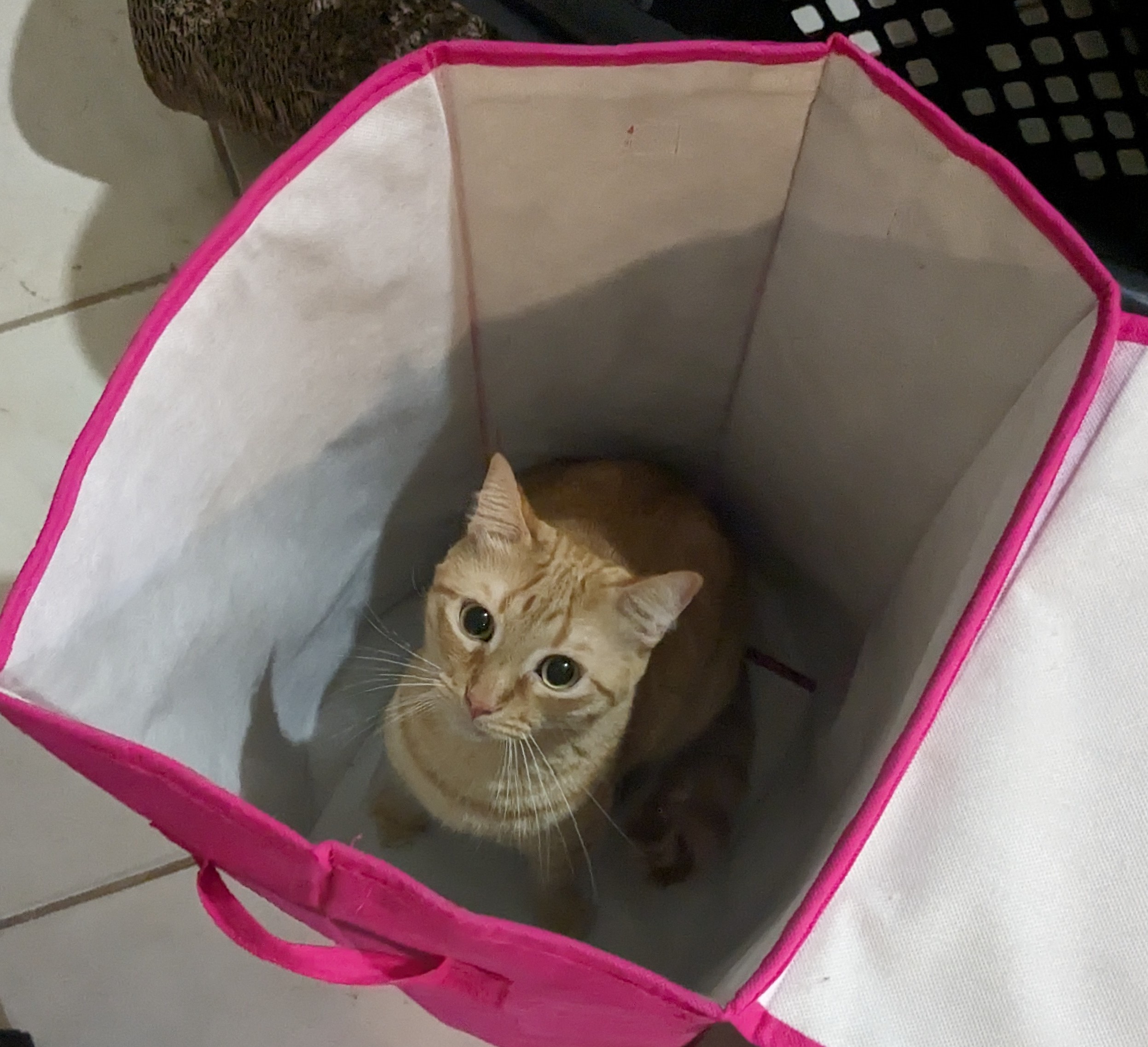
I have two cats, both adopted strays. One is orange and is 3-4 years old. The other is black and 2-3 years old.
Longevity escape velocity is a theorized point where life expectancy increases faster than time passes. Such an occurrence would essentially eliminate age-related mortality. If this point occurs in the next 10-15 years, my kitties got a chance at many decades (or even century/millenia) of head scritches.
This market resolves as no if either of my cats pass away. If they are still healthy in 20 years, or a major news outlet reports something similar to the longevity escape velocity has been realized, this resolves as yes.
The odds here are long, and are likely contingent on short AGI timelines, or some incredible breakthroughs from the longevity community. But hey, I'll take even a .01% chance of success given every previous generation had an essentially 0% chance. Given the nature of the market, I will not be betting.
Marceline:
Dmitri:
 1,000
1,000For the cats' sake, the clock that matters: the first placebo-controlled lifespan trials of anti-aging drugs in any pet species are in dogs (TRIAD with rapamycin, NIH-funded through 2029; Loyal's STAY study with LOY-002, 1,300 dogs), and the FDA's veterinary center has already accepted lifespan extension as a drug indication for dogs. Cats have nothing comparable yet; the nearest thing is FeliAIM, a kidney-disease drug filed in Japan in April 2026 after a small study where treated cats had about 80% one-year survival versus 20% untreated. A 3-year-old cat has roughly 10 to 12 years left on today's numbers, so the realistic 2030s question is whether a dog result crosses over to cats in time, not whether people reach escape velocity. Which species gets the first approved lifespan drug (mine): /w0lph/which-species-will-get-the-first-re