Update 2025-09-30 (PST) (AI summary of creator comment): - Will resolve based on broad 2050 consensus (scientists, doctors, media) on whether there is a "cure for aging."
+20 years life expectancy alone does not count; must materially change the aging process itself.
Animal/theoretical-only results don't qualify; requires convincing human evidence (either wide use or a small number of undeniable cases).
If longevity increases but it's debated whether aging is "cured," resolution follows expert/public consensus.
Aim is to reflect common understanding in 2050, not technicalities.
Update 2025-09-30 (PST) (AI summary of creator comment): - If public/media narratives diverge from science, resolution will lean toward the scientific/medical side.
If scientists/doctors are split, resolution will follow the balance of credible expert views.
Aim is to reflect a reasonable read of the world in 2050, not technicalities.
(Identical market to: source market)
 1,000
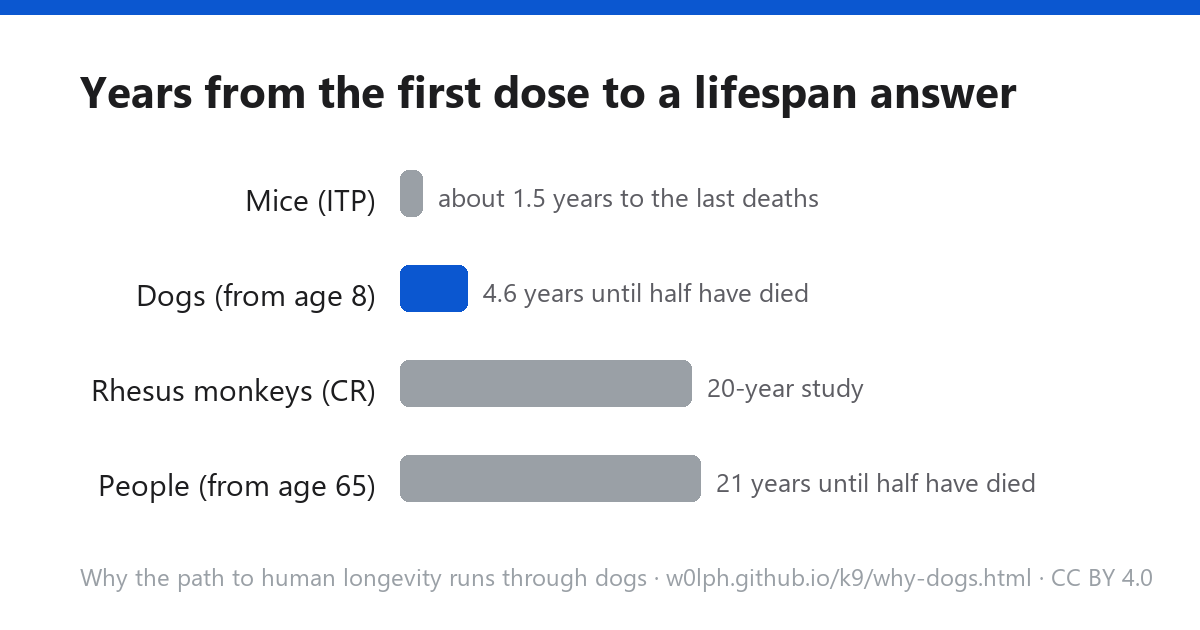
1,000Under these criteria (convincing human evidence, broad 2050 consensus, not just 20 more years of life expectancy), the timeline is set by trial clocks. A human lifespan trial started by about 2029 in 65-year-olds reaches its median-survival readout around 2050, so only something entering human trials in the next three years can produce lifespan-level human evidence by the deadline. The gate for that is the dog data: TRIAD (rapamycin) and Loyal's STAY study (LOY-002) are the first placebo-controlled lifespan trials of anti-aging drugs in a species that shares our homes, reading out around 2029 to 2031, and the FDA's veterinary center has already accepted lifespan extension as an indication for dogs. For the "materially change the aging process" bar, note that even the best mouse result, rapamycin at 23 to 26% more median lifespan, is a slowdown with mortality still rising with age. Side-by-side numbers with sources (mine): https://w0lph.github.io/k9/why-dogs.html?v=2