Data is currently at
https://data.giss.nasa.gov/gistemp/tabledata_v4/GLB.Ts+dSST.csv
or
https://data.giss.nasa.gov/gistemp/tabledata_v4/GLB.Ts+dSST.txt
(or such updated location for this Gistemp v4 LOTI data)
January 2024 might show as 124 in hundredths of a degree C, this is +1.24C above the 1951-1980 base period. If it shows as 1.22 then it is in degrees i.e. 1.22C. Same logic/interpretation as this will be applied.
If the version or base period changes then I will consult with traders over what is best way for any such change to have least effect on betting positions or consider N/A if it is unclear what the sensible least effect resolution should be.
Numbers expected to be displayed to hundredth of a degree. The extra digit used here is to ensure understanding that +1.20C resolves to an exceed 1.195C option.
Resolves per first update seen by me or posted as long, as there is no reason to think data shown is significantly in error. If there is reason to think there may be an error then resolution will be delayed at least 24 hours. Minor later update should not cause a need to re-resolve.
March 2026 market
 1,000
1,000🏅 Top traders
| # | Trader | Total profit |
|---|---|---|
| 1 | Ṁ776 | |
| 2 | Ṁ108 | |
| 3 | Ṁ108 | |
| 4 | Ṁ64 | |
| 5 | Ṁ32 |
People are also trading

GISTEMP Results (Feb 2026)
03/03 - 1.254
@chaitea I get a slightly different value (124.28), but more importantly it's too early and also NW Russia looks completely implausible -- this doesn't look like something homogenization is going to fix and it looks more like a data error. Just throw out this run.
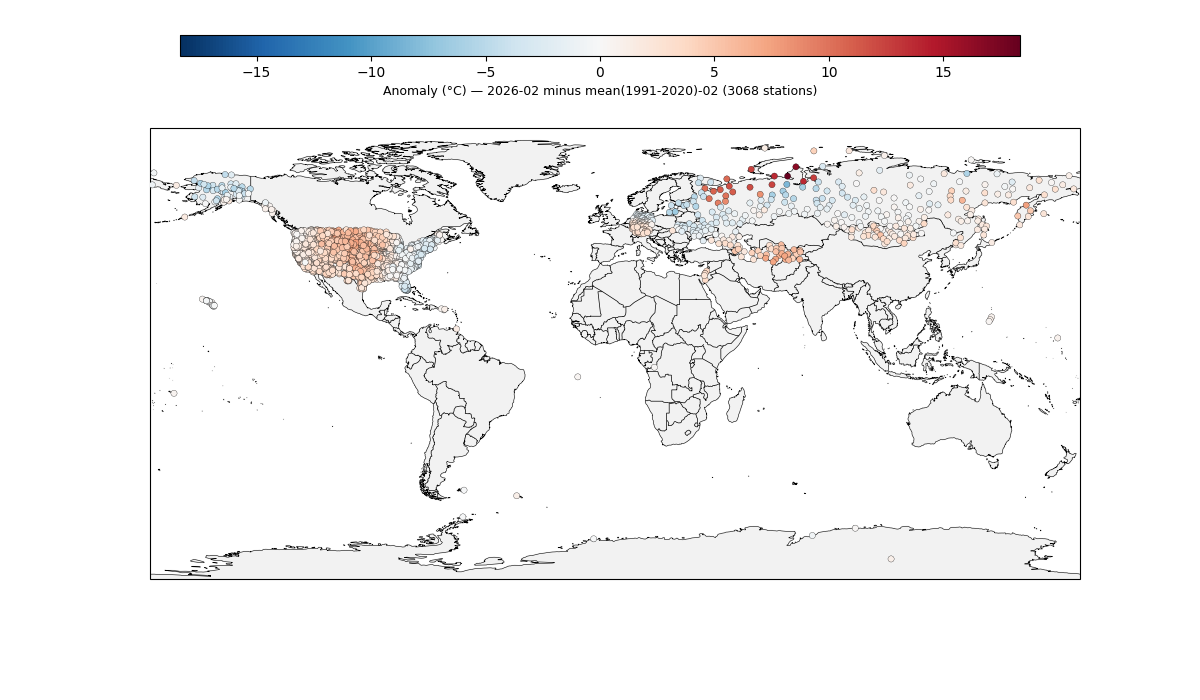
Same problem with new ghcnm
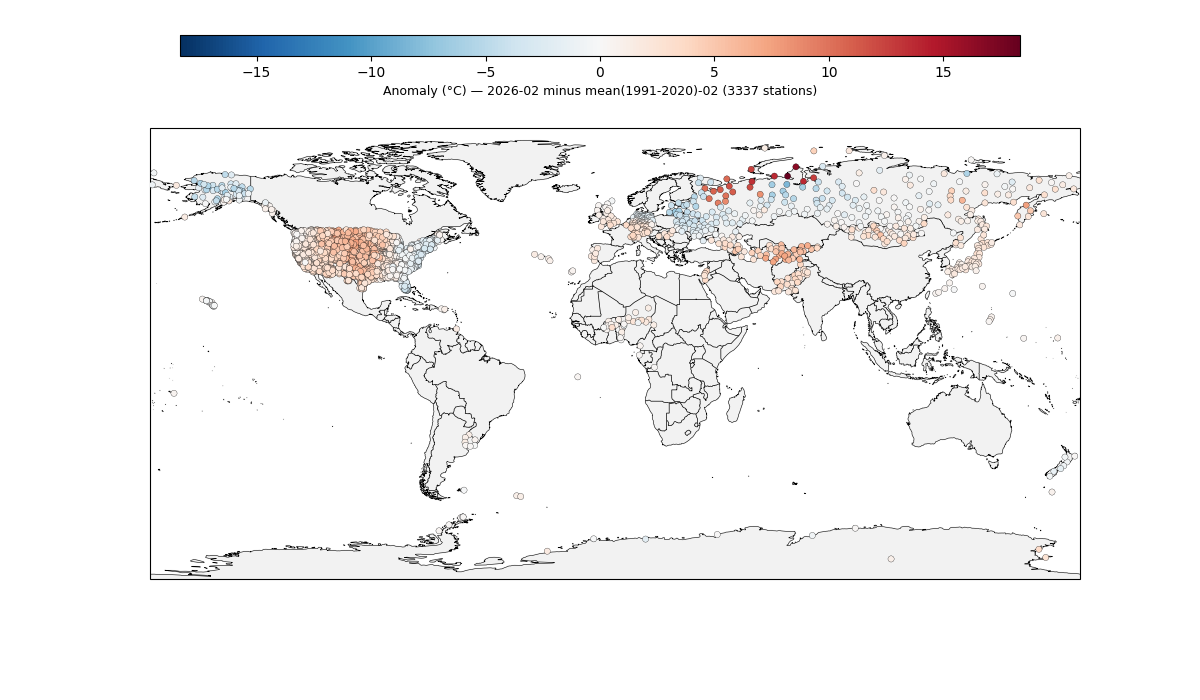
One of the stations (Petrun) that was anomalously high did flip, compare the prior ghcnm to last night's ghcnm (a -19 C difference):
RSM000233242026TAVG-2120 P -545 P-9999 -9999 -9999 -9999 -9999 -9999 -9999 -9999 -9999 -9999
RSM000233242026TAVG-2120 P-2425 P-9999 -9999 -9999 -9999 -9999 -9999 -9999 -9999 -9999 -9999
This doesn't seem to even be explainable by partial data for the month (I have partial monthly means that go from Feb1-Feb 9 for instance to Feb1 - 26 from ERA5 and that region should have a cold anomaly) ...
Again, same problem with new ghcnm.
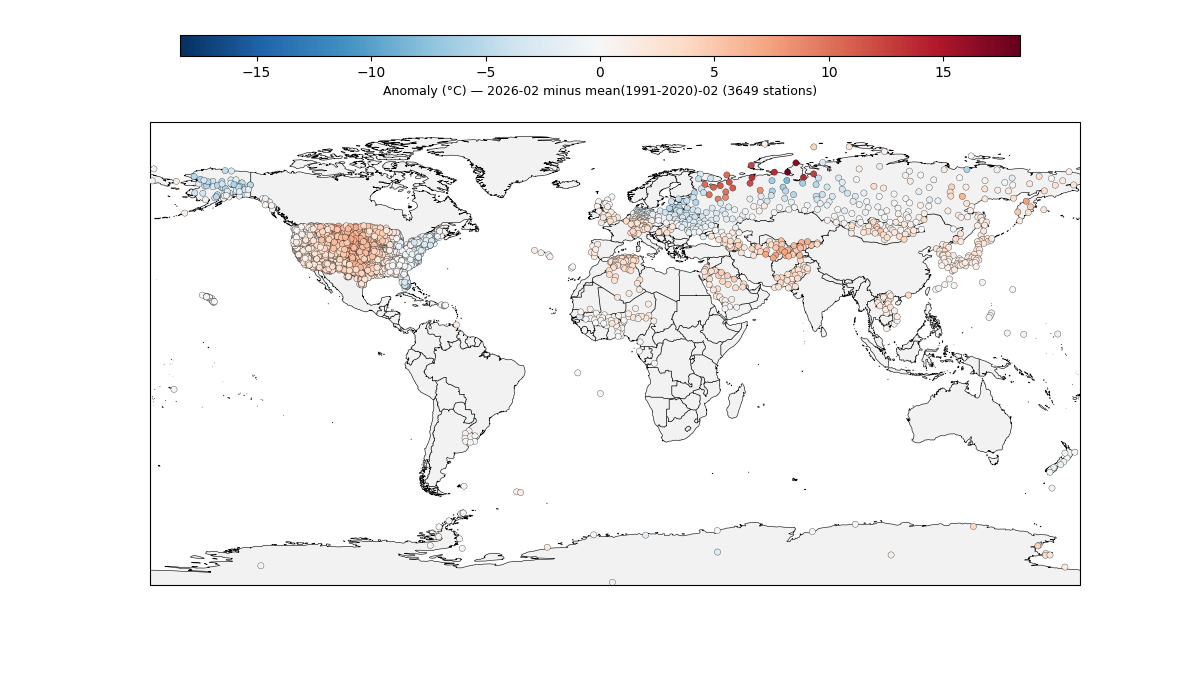
Given now we have most of the warmest warm anomalies now that the Sahel data has come in (excluding pieces of China/India), I reran the data from last night omitting the 19 NW Russian stations that are obviously erroneous. This leaves us though with a skewed dataset and roughly 40% or so of the data missing still:
This produces a gistemp for February of: 124.29
I've modified the below chart that you might be familiar with to properly show the anomaly as normal in the 1991-2020 dataset with it being Target-Reference now (so blue is cold anomaly in 2026):
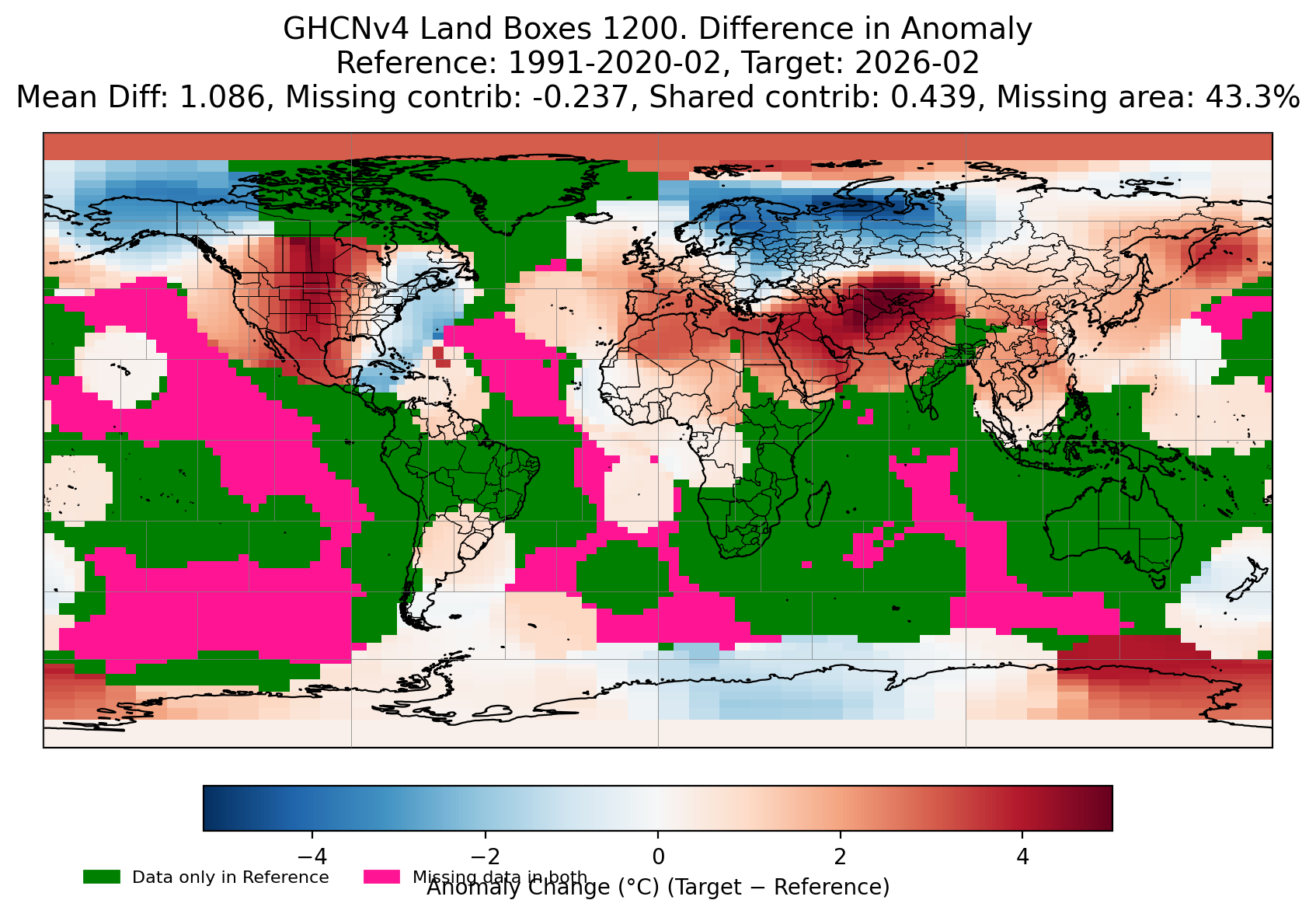
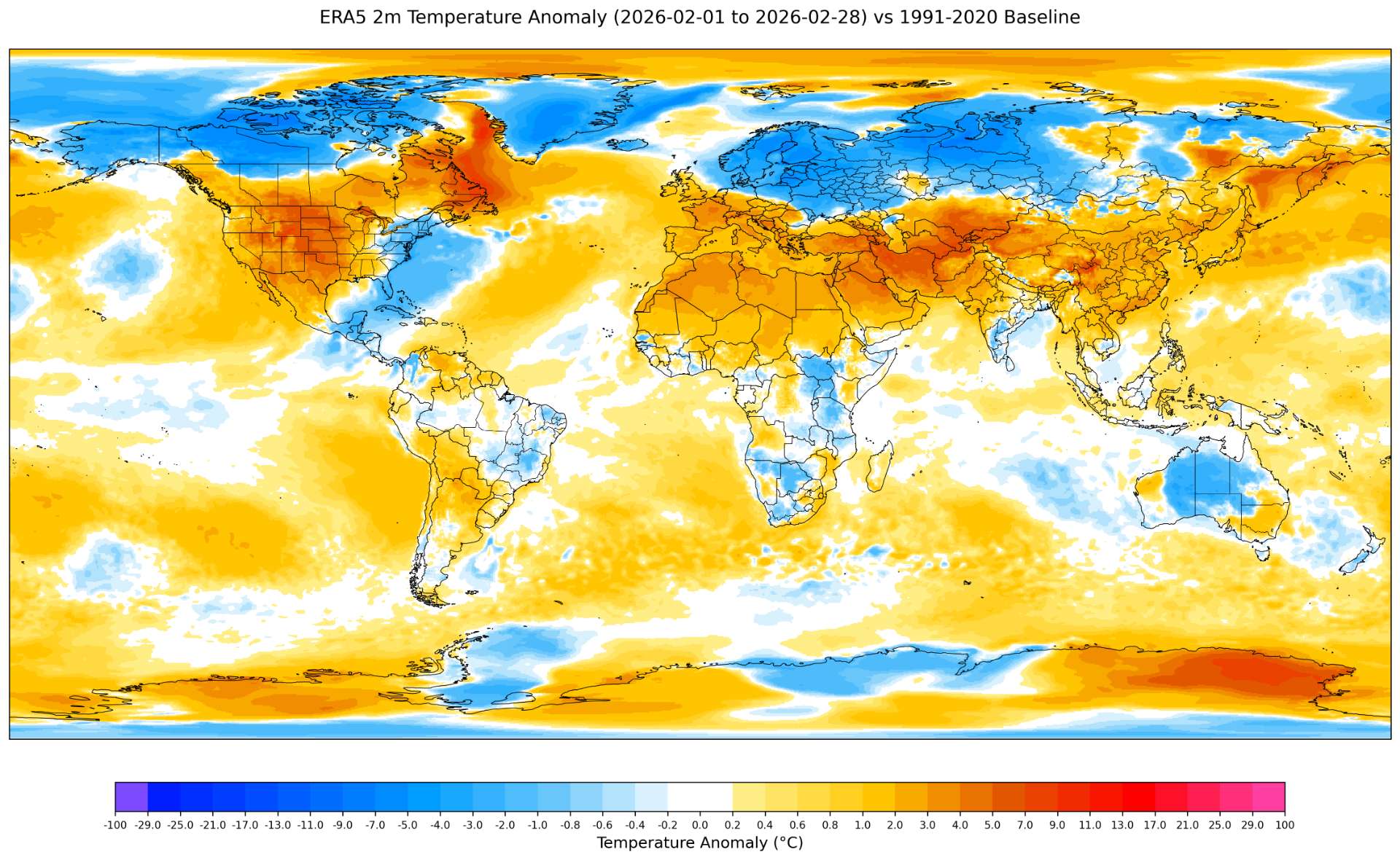
With the erroneously warm Russian stations omitted it looks like NW Russia is being infilled properly. Below is the ERA5 data I reference for the following analysis:
Although NE Canada shows a very warm anomaly in ERA5 that is not the main issue. In the box north of it in GISTEMP covering Greenland and Canada right now it looks like its actually being infilled on the warm side (with the poleward most subbox being infilled by the other hemisphere's islands), so since most of the anomaly will end up being fairly cold in that box, it should have substantial room to shift downwards (if eyeballing the anomaly is ~ -3C, then -3/80 becomes ~ -0.0375 C, and since the box is already on the warm side it could alone cause the global temps to go change by -0.04 or or more). Mexico also looks like its infilled too warm so that should counter some of the missing warm anomaly in NE canada. Rest of NH looks plausible enough as far as what I would expect would be the effect of infilling.
Having taken care of the NH, the SH needs a look to since most of the data is missing.
ERA5 2m temps (through all but last day) below I used as reference. Unfortunately I have to sort of eyeball here without writing more code but it looks like using the air temp as a proxy for ssts, the land anomaly should be cooler than the ocean anomaly this year (Australia is net slightly cold as some of the warm anomalies cancel out perhaps on average by a degree (over say a couple boxes on average) with the surrounding land, and both Africa and the rest of the infilled SE Asia/Oceania being net neutral, and one of the missing boxes from S. America with missing data going to end up neutral rather slightly warm so a change downwards of net about a degree), with the ocean being obviously net warm by perhaps very roughly 1 C. So (-1C*2/80 -1C*1/80 ~= -3/80 C downward adjustment). So based on this very rough and speculative guess, the land anomaly for the SH could drop the global temps by a further -0.0375 deg.
So given the above and below we could see a ~ -0.08 C drop once we get the rest of the data.
Given the starting skewed of gistemp 1.24, this would bring it to 1.16C, which is inline with the original ERA5 predictions.
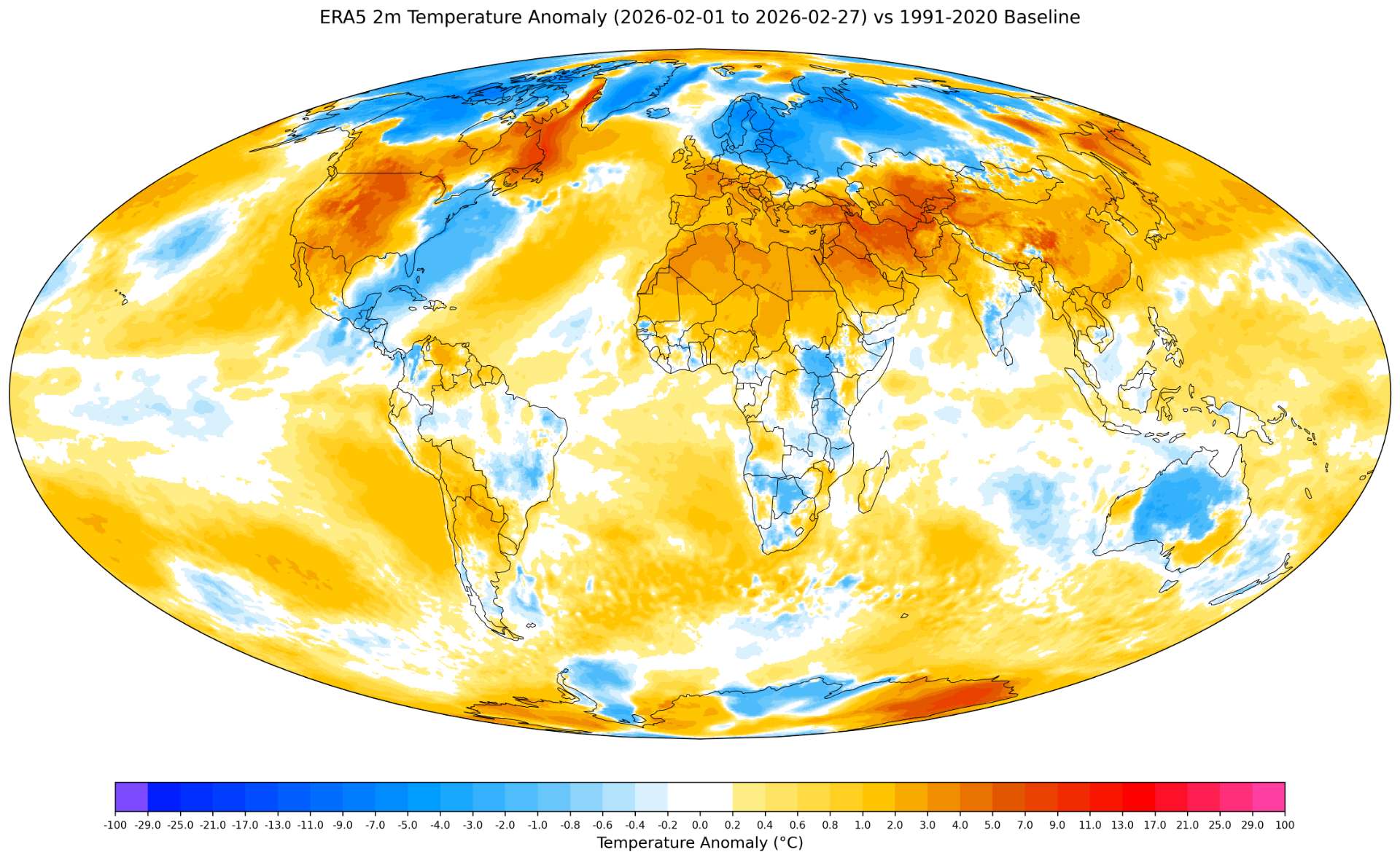
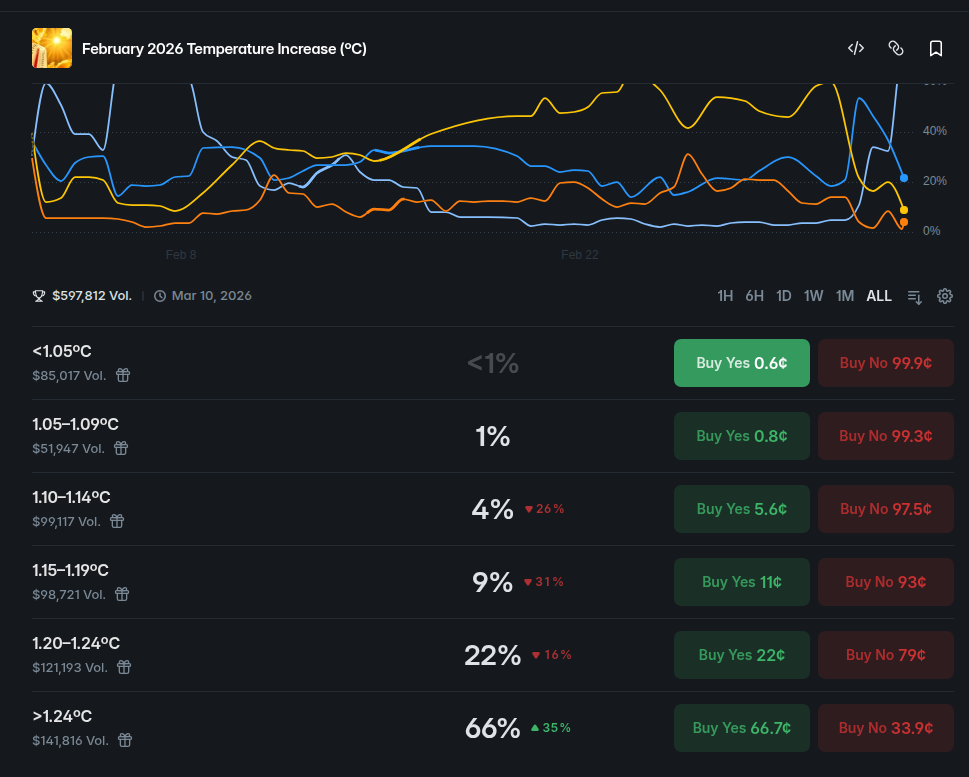
Since this is very rough guesswork the only thing I am confident in is that the >= 1.25 bins should be safely ruled out now since I've already determined its skewed high and should drop lower. Either this judgment is correct, or polymarket knows something I don't, since they've updated in the last two days (perhaps blindly?) in the other direction. I've also increased my bet slightly in the 1.15-1.20 bin since this estimate is further weak evidence for it.
@parhizj a good chunk of Russian stations have been revised down, at a quick glance there are about 15 remaining
@chaitea Might have missed one yesterday, today there are still 16.
Excluding them I get 124.05 from ghcnm.v4.0.1.20260305.
This was far from my expectations yesterday considering how much coverage there is.
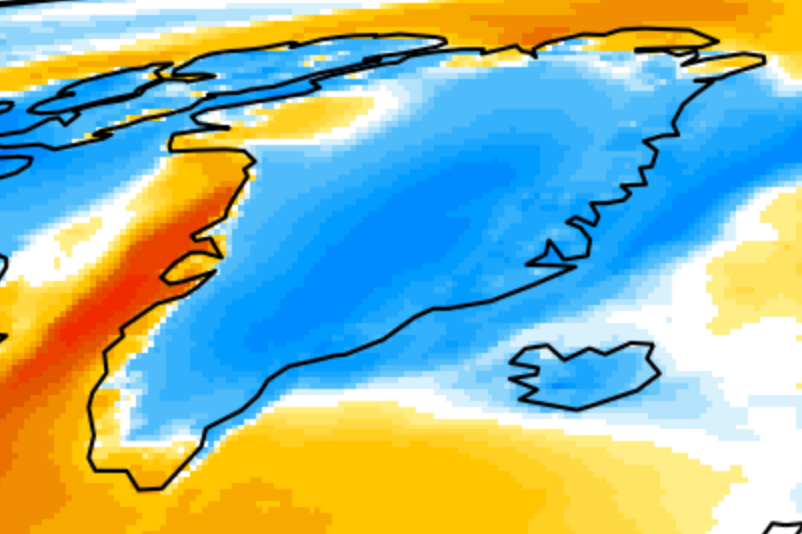
Edit: One thing I missed yesterday looking at the ERA5 map is that the western coast of Greenland had a warm anomaly (it was such a small sliver I missed it).
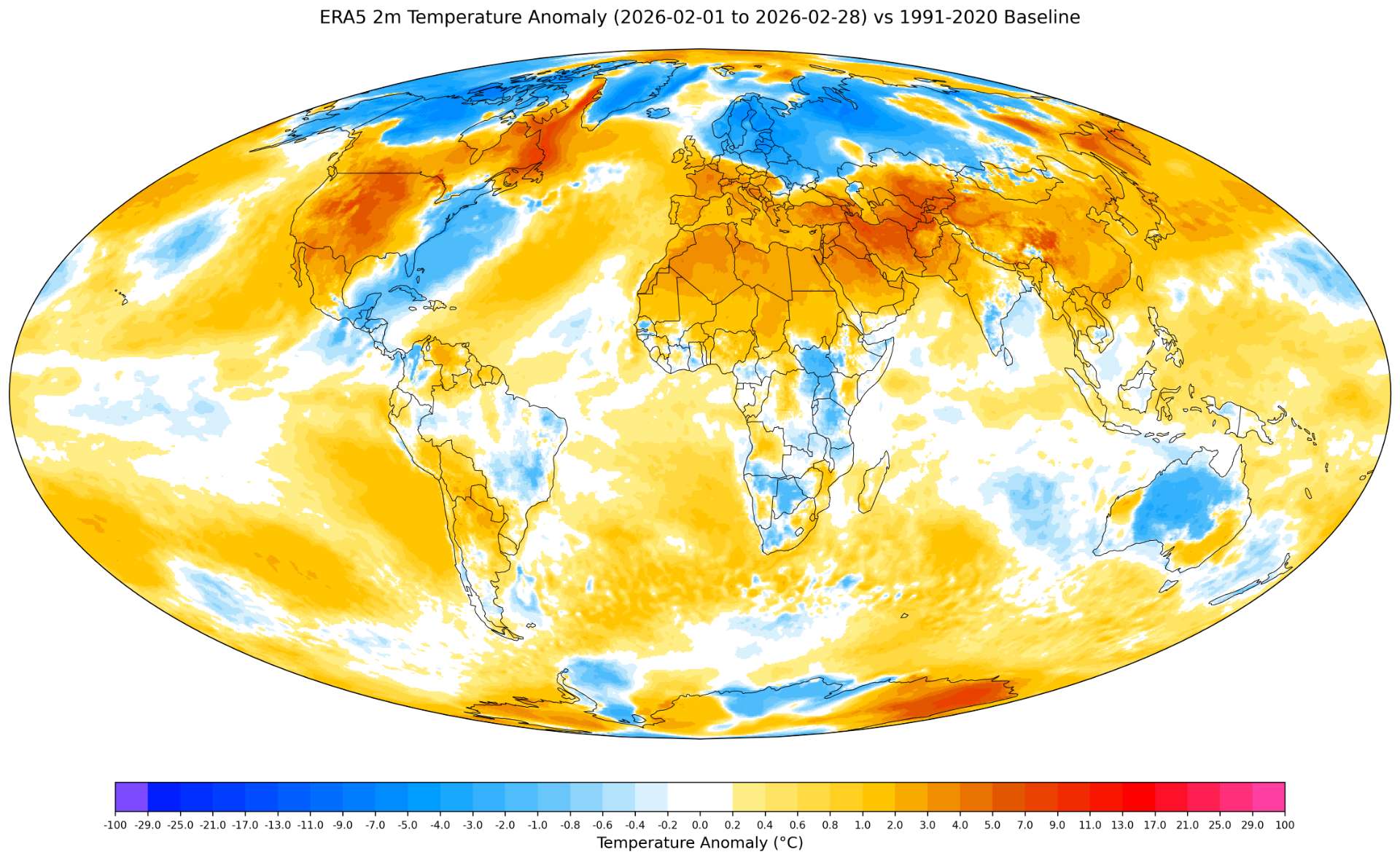
More stations and better coverage (~12%)
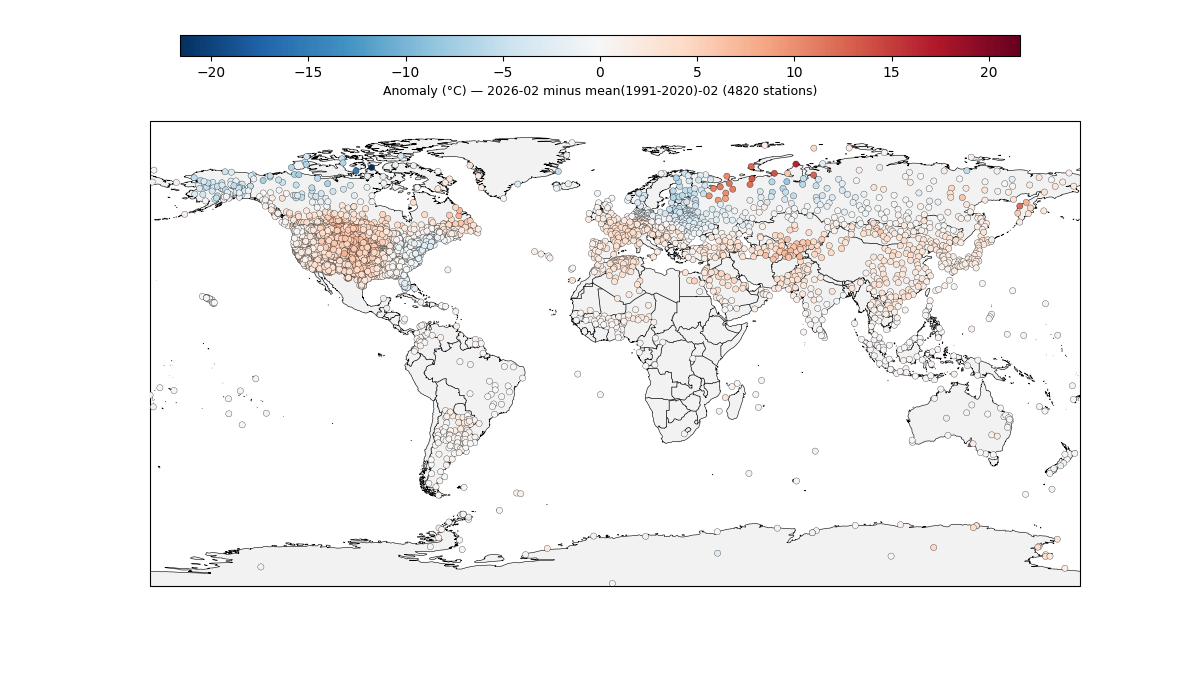
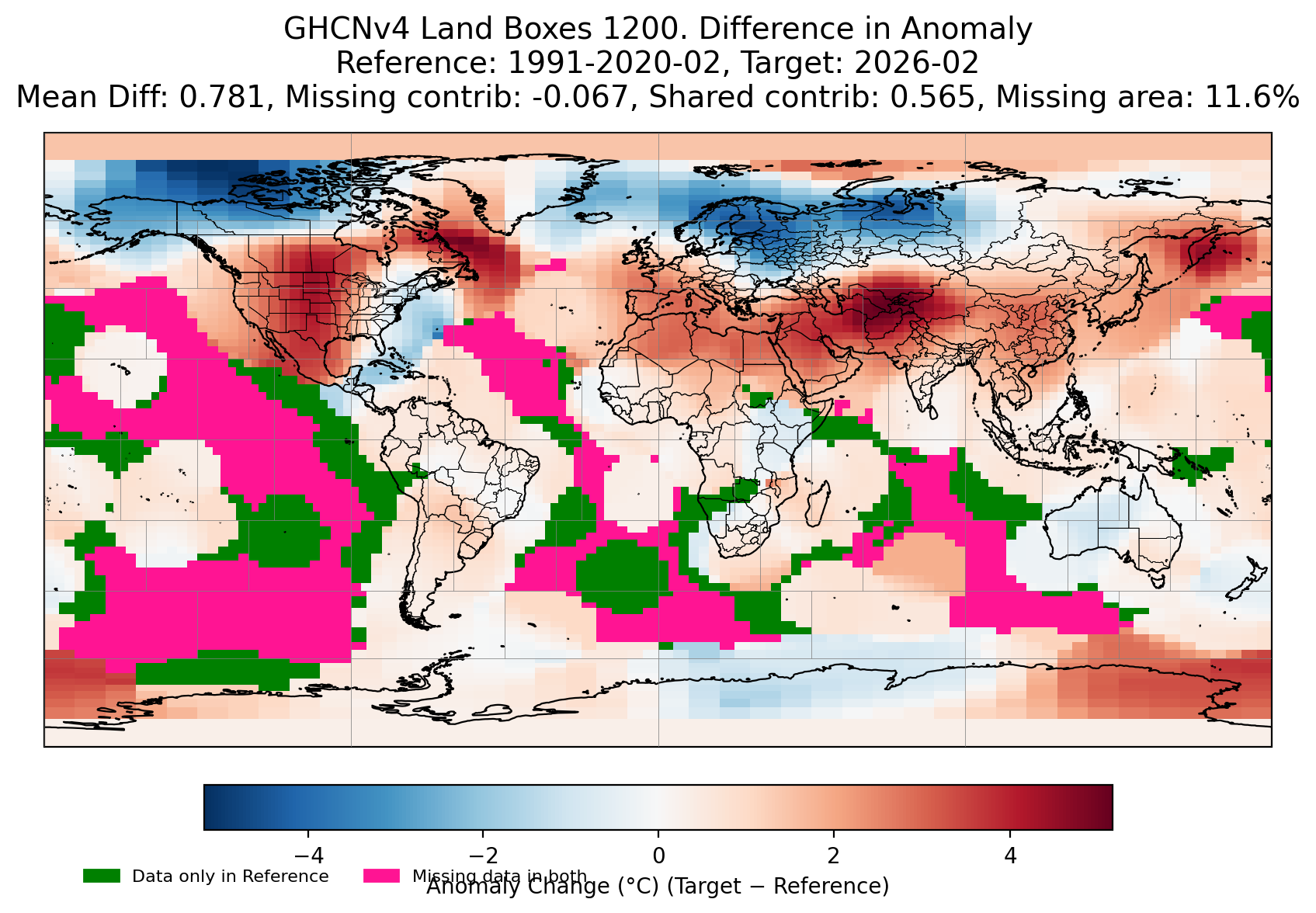
Considering what is there that will bring the temps down in the future:
1) it's very sparse still though in Australia (maybe net another -0.01 C downwards if its a homogenization effect, though Western Australia is still missing which should raise it slightly)
2) Mexico is overdone from US (maybe net another -0.01 C)
3) Looking at the anomalies in the subboxes for NW Russia, despite excluding the hot stations in GISTEMP I suspect the homogenization effect from those erroneously warm stations are still under estimating the cold in the region baked in from the GHCNm run. (this is much harder to estimate but I think at least -0.01 C cooler (-0.02 C more likely) is plausible given the anomalies are in the +9 to +17C range from the 1991-2020 baseline, and given they are supposed to be cold I still think even the nearby "cold" stations that have been updated and included are subsequently higher than they should be -- this is why the cold anomaly has lessened in today's run)
So adjusting from this new data I think -0.04 from the above run, is plausible though it could be more once the Russian stations get removed from the ghcnm run. This would put it at 1.20 C.
I've updated my bets towards this direction but not completely since I am still weighting ERA5 slightly more, since I am less confident than yesterday in eyeballing this.
@chaitea Aye. They didn't remove Narjnan Mar for some reason, but with it in the strange file I also get the same value (124.40).
This is pretty much the worst case for me for the predictions since so many cold stations are missing at the moment (especially in Russia, where they tossed 4 cold stations from the prior run that looked plausibly good).
Australia is still biased warm with a lot of stations still missing. Mexico is still biased warm from the southern US with all of it still missing.
Since NASA is likely to use Sunday night's data and assuming NOAA doesn't fix ghcnm to include Russia in between now and then we are just let with the automatic inclusion of perhaps Mexico and more Australia stations. This outlook doesn't look like enough to drop it down to the 1.15-1.20 bin before the release. I've updated my bets in this direction based on this conclusion with the below analysis:
~
I've updated all my plots this morning so they are much more comparable (all use the ERA5 colormap now) with four very notable changes, that make them not comparable to previous months I've done the charts for them (with the overall effect of better representing what GISTEMP is actually processing for this stage of predictions).
(1) the station plotter now excludes strange stations properly
(2) for the station plotter, I've switched to the min number of years in the 1991-2020 reference period to be included (in order to rebase to 1991-2020 anomaly) in the plot down to 5 years (from 10) since some of the South Africa stations records are still spotty but are obviously being included in GISTEMP with its compositor.
The anomaly averages won't be as good, but it increased the number of stations plotted from 5046 to 5331 for the latest run before applying (2). After applying (3) it went down to (edit v2) 4785 though.
(3) the station plotter also now excludes stations that are masked for a particular month (step3 + step5mask); i.e. SF001485170 is masked for February, which is giving South Africa an overall warm anomaly in GISTEMP with the current data available.
(4) the land subbox comparison also now excludes subbox that are ocean subboxes (using step5mask file); this lumps any "missing" with it (also needed to change colors for the legend for missing, only in reference difference). This means the coverage percent will be based on the LAND coverage (%) of land subboxes.
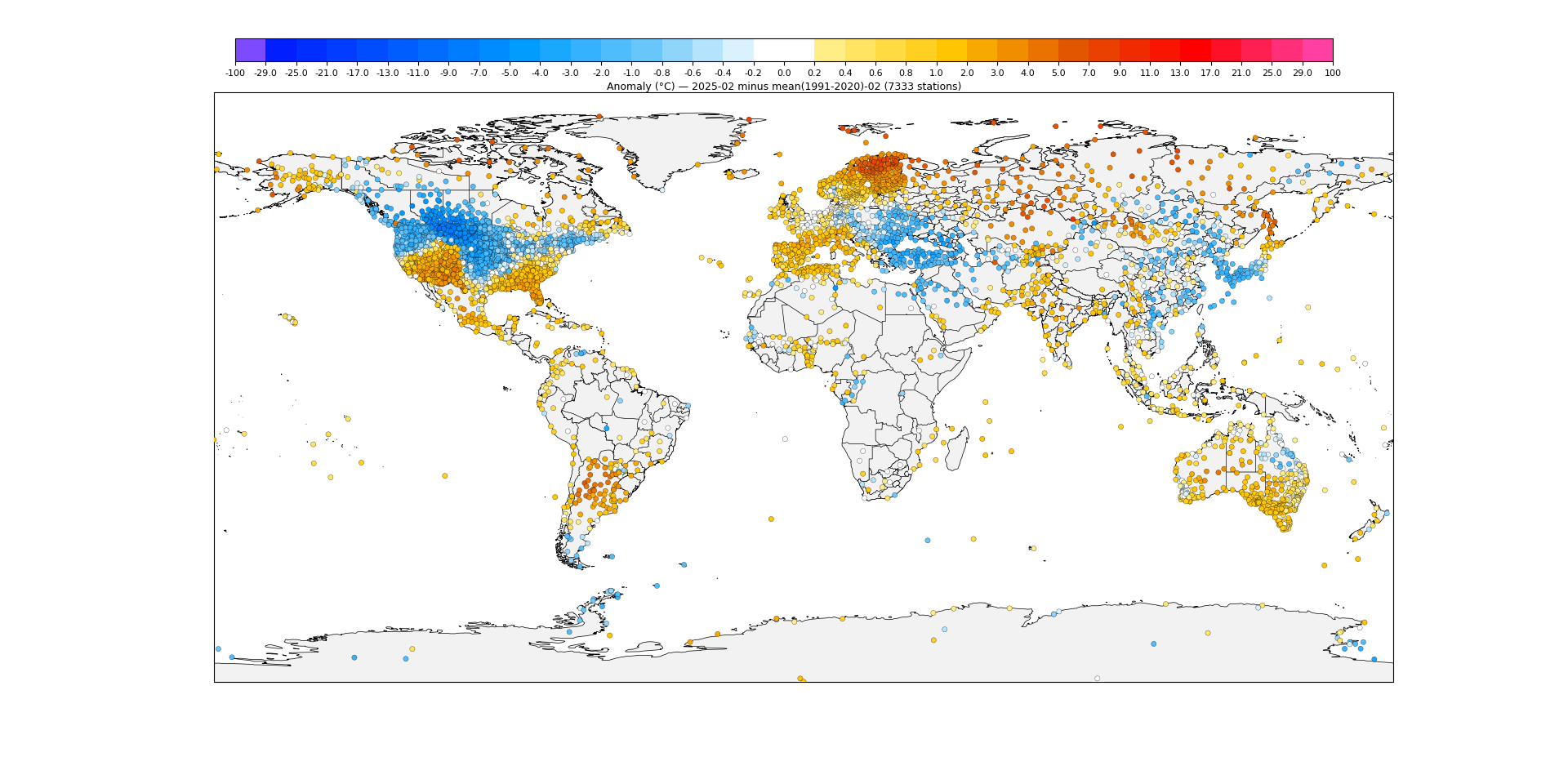
So now the first two charts below can be used to discern the differences between the datasets, and the last understand why the difference is present (what stations are absent, erroneous or different).
ERA5 (t2m) in plate carree for reference:
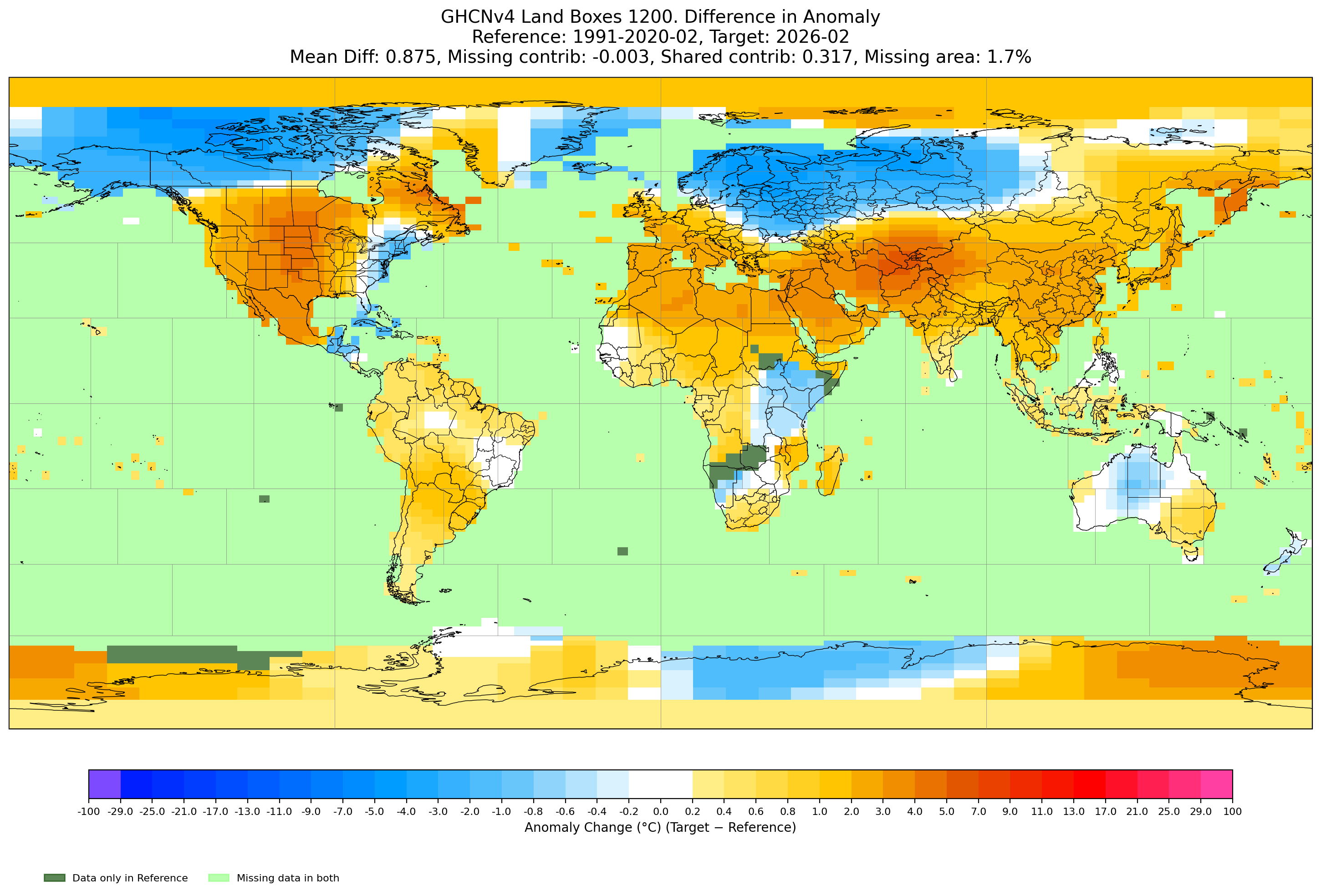
ghcnm.v4.0.1.20260306:
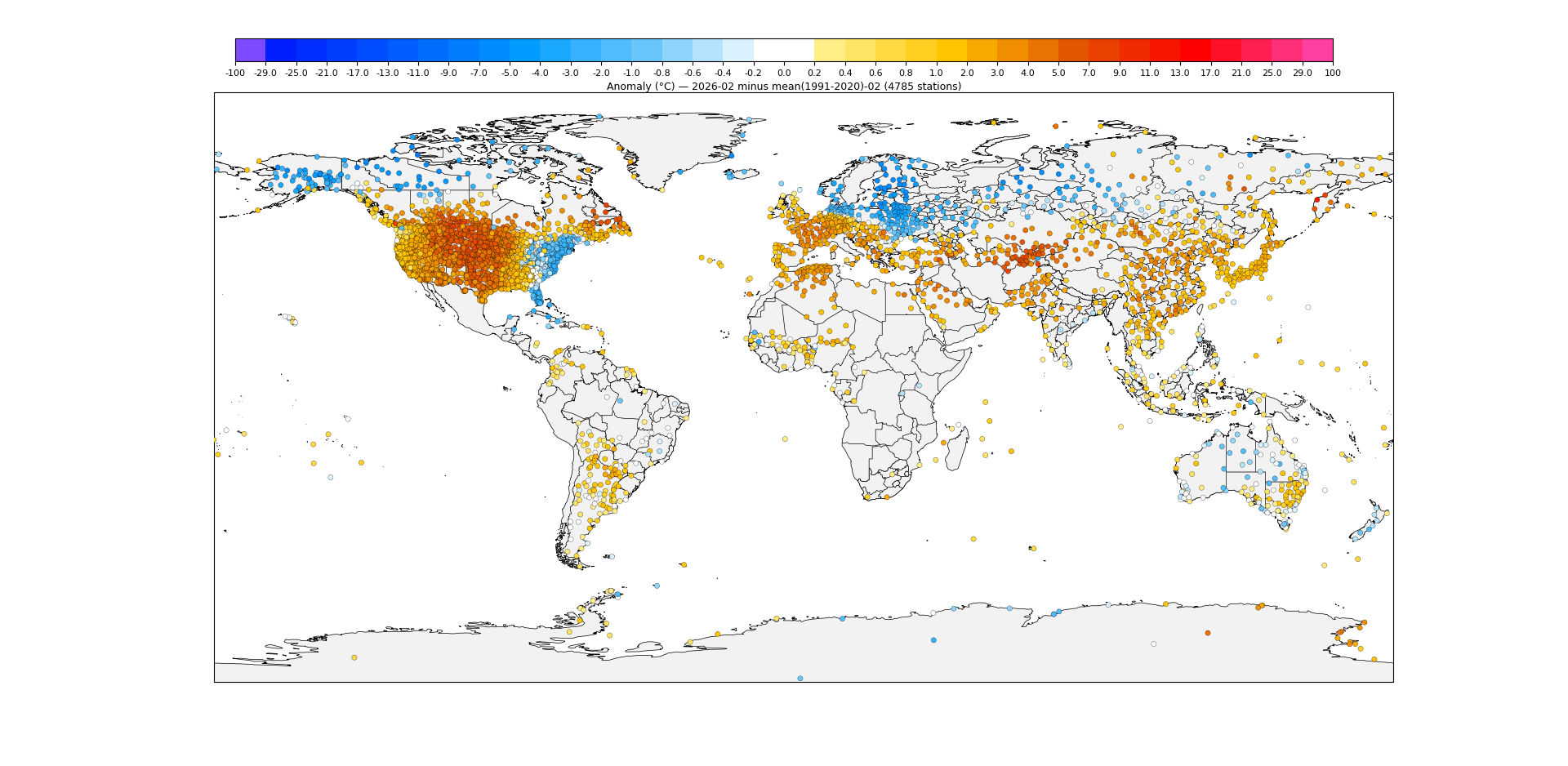
above without step 3 and step 5 gistemp filtering (change (3) above):
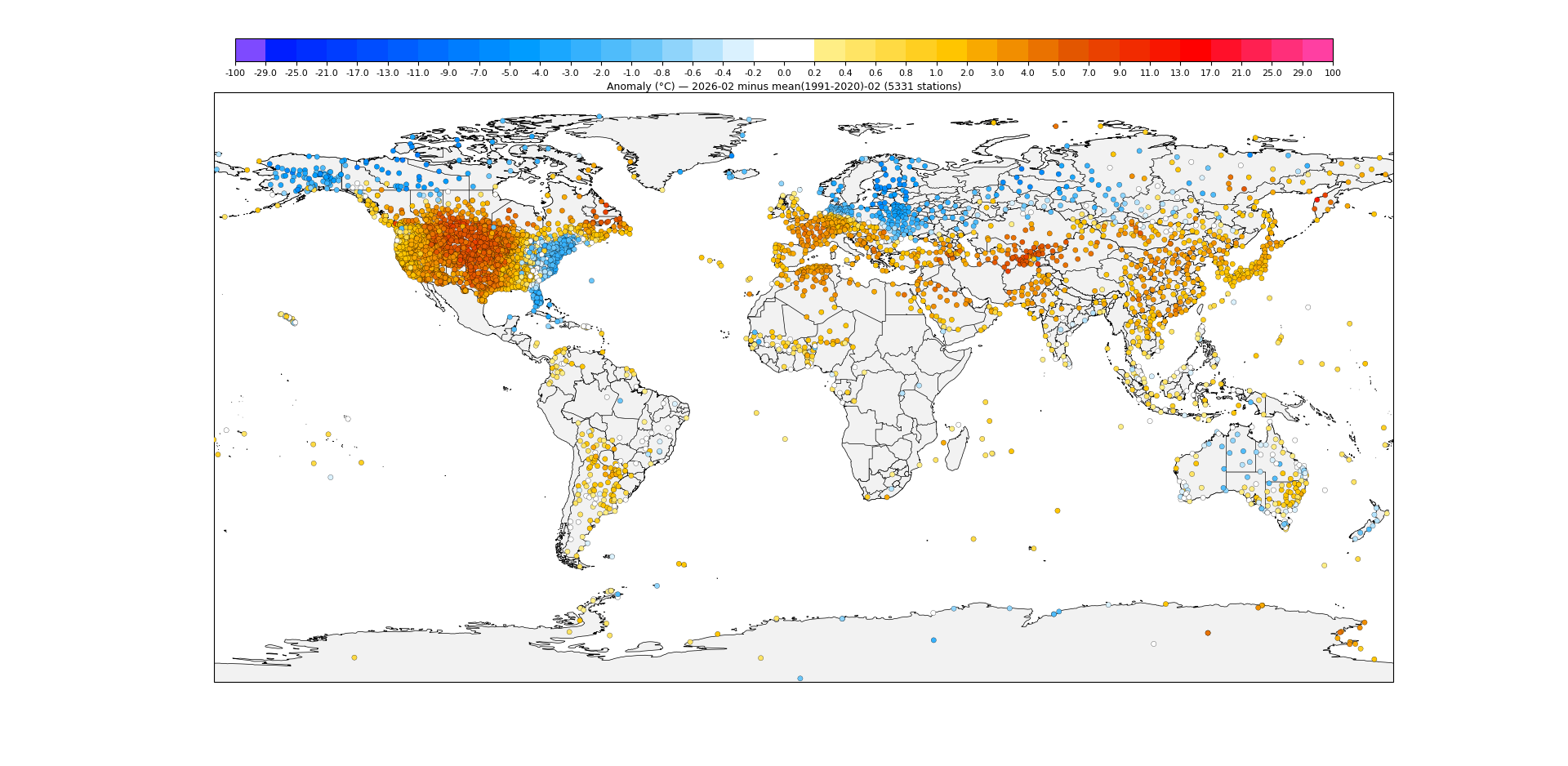
Edit v2:
Here is what Feb 2025 looks like for comparison (7333 stations, so only 65% the number of stations in latest run).
Marginal changes since yesterday...
We got about 80 more stations, including about a dozen in Mexico, that marginally brought it down in parts, but rose somewhat in the Mediterranean with added stations there (especiallly slight warming in Northern Africa). No new Australia stations =\ (have 145 stations for Feb vs. 496 stations for Jan.)
Based on the past history of updates not going to expect more Australia tonight.
Maybe we will get Sweden but that will only be a marginal change downwards. Rest of Mexico is still possible to come in tonight based on past patterns but thats pretty much it based on past experience, and its not going to cause any significant shift. So tonight's ghcnm is likely the last chance for more stations to get added (barring some unexpected & very unlikely action on NASA to delay until we get better data for Russia/Australia).
ghcnm.v4.0.1.20260307:
124.41
(excluding Narjnan Mar still)
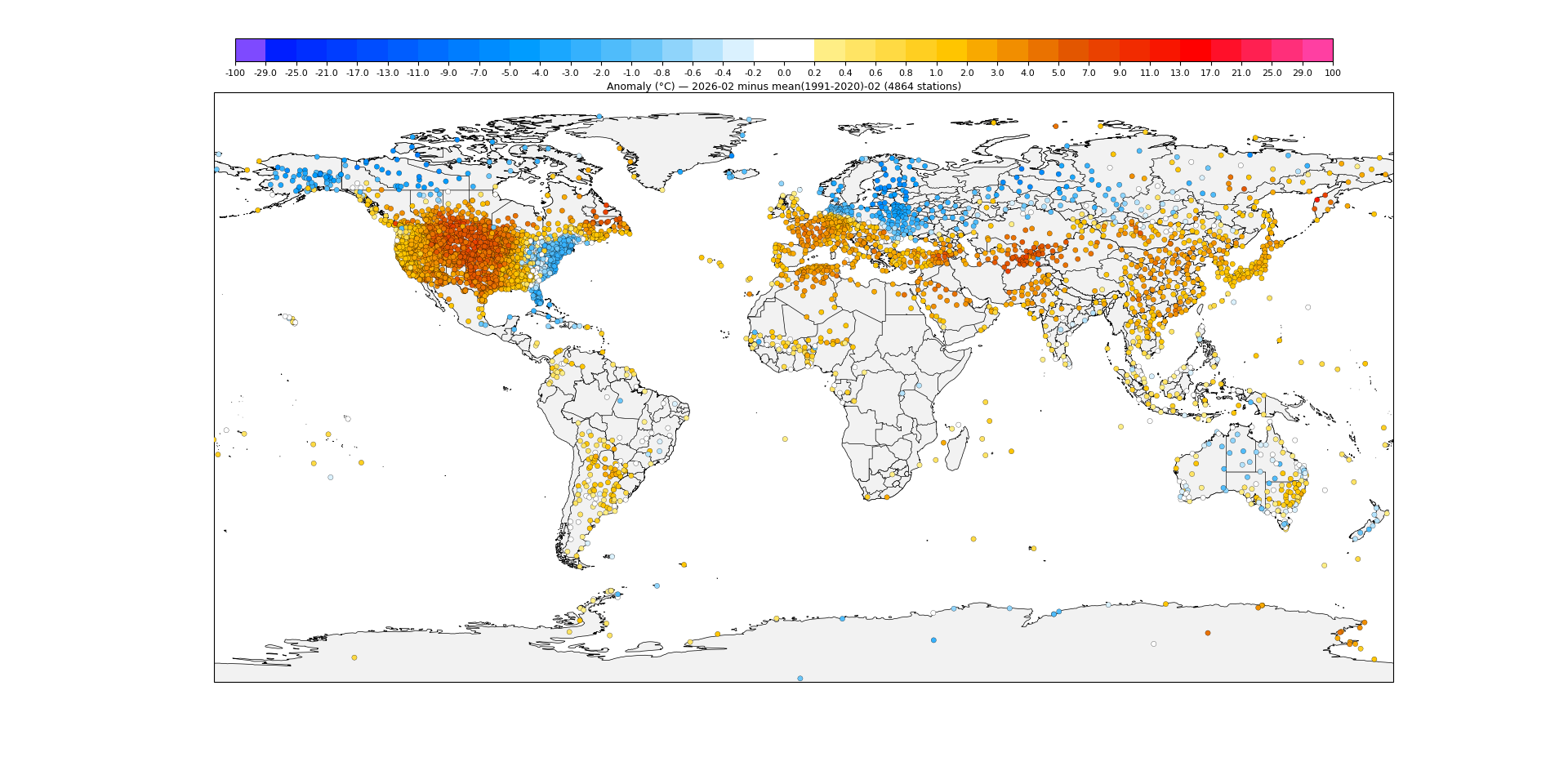
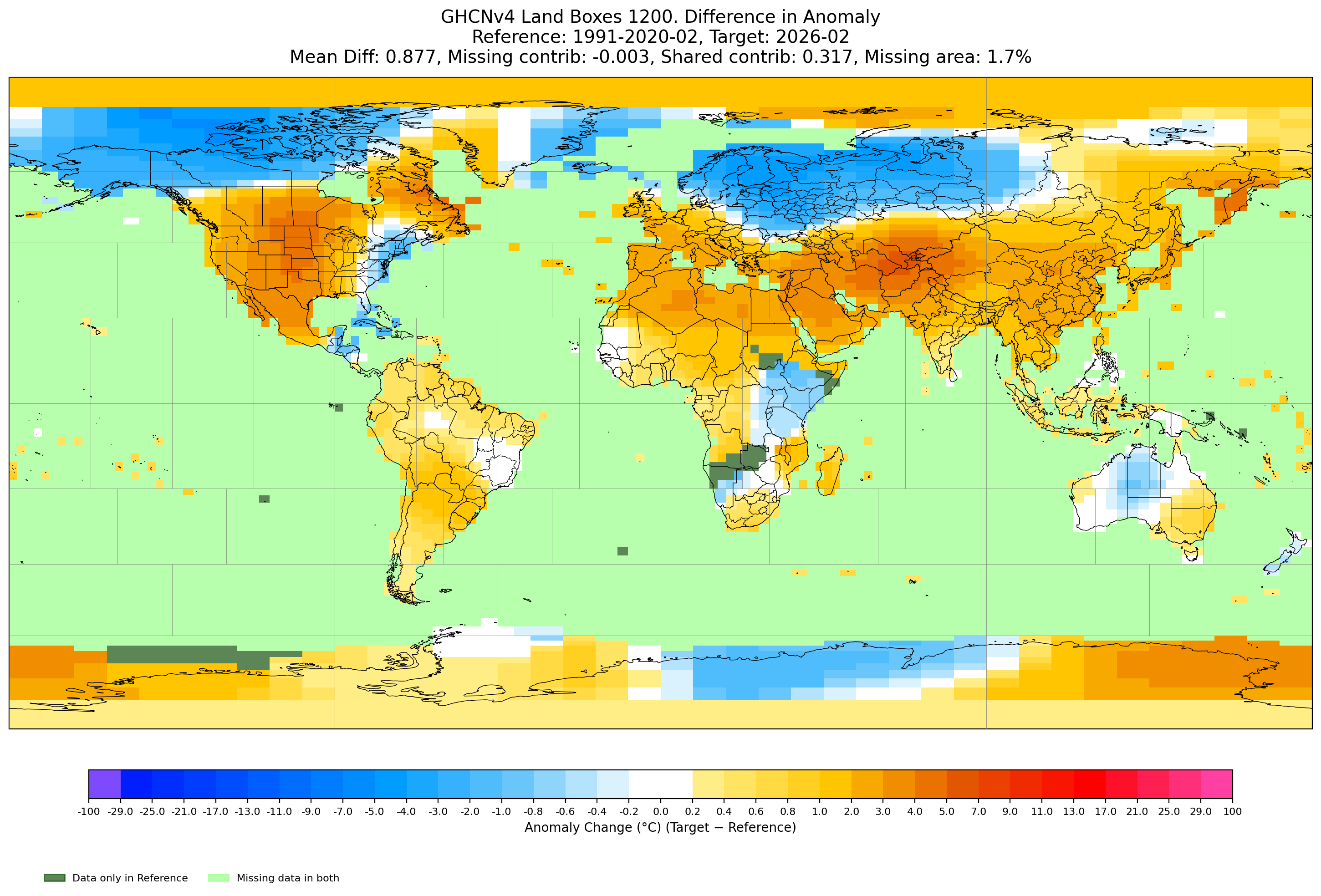
@chaitea GISS confirmed they will ignore the station for the run unless NOAA supplies them with correct temperature for NW Rus. I still think we will get more stations in Australia and a few in Mexico, so it will probably end on 1.23
ghcnm.v4.0.1.20260308:
124.42
Rest of Australia came in, and so did Mexico. No Sweden or additional Russia.
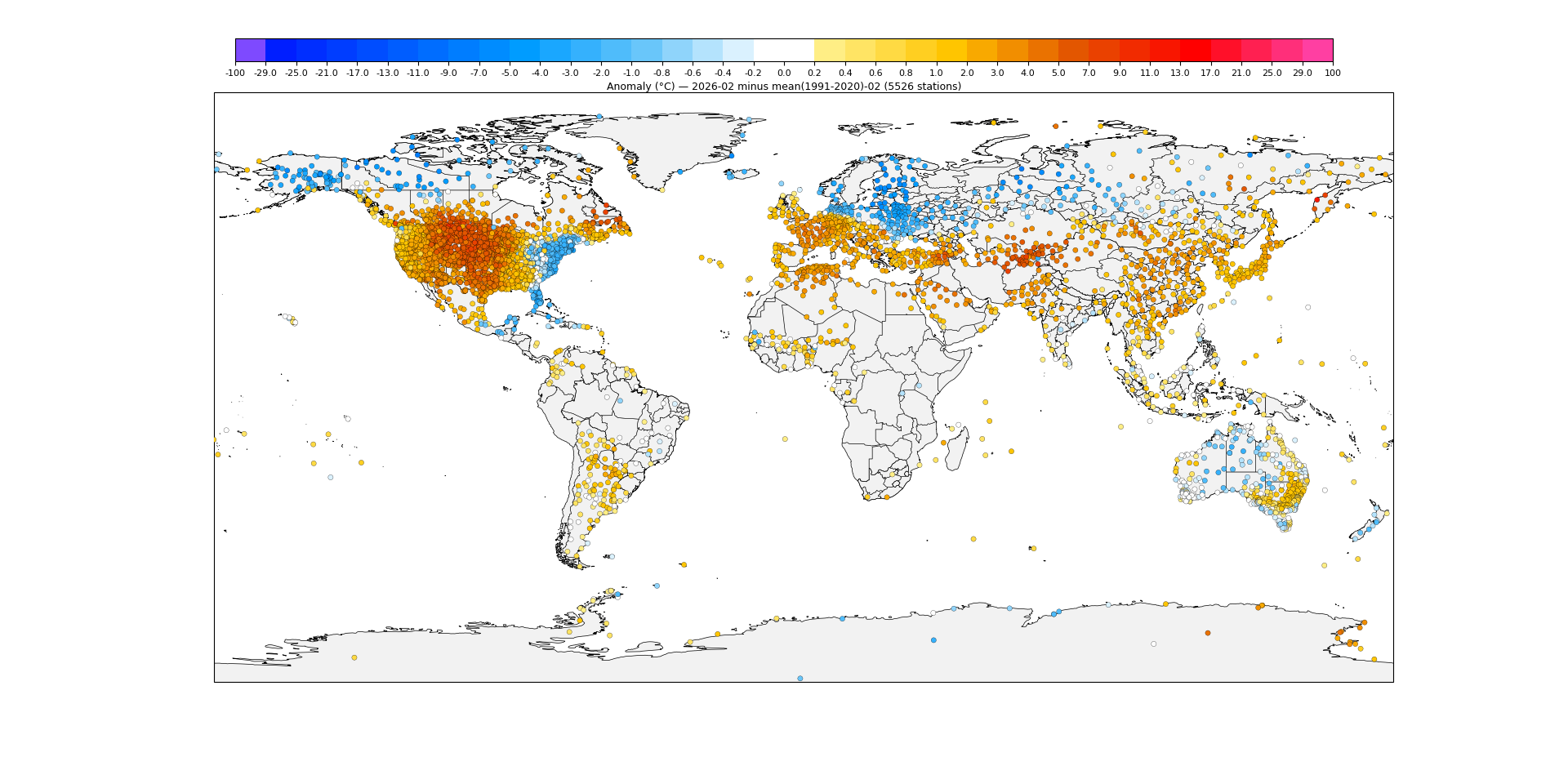
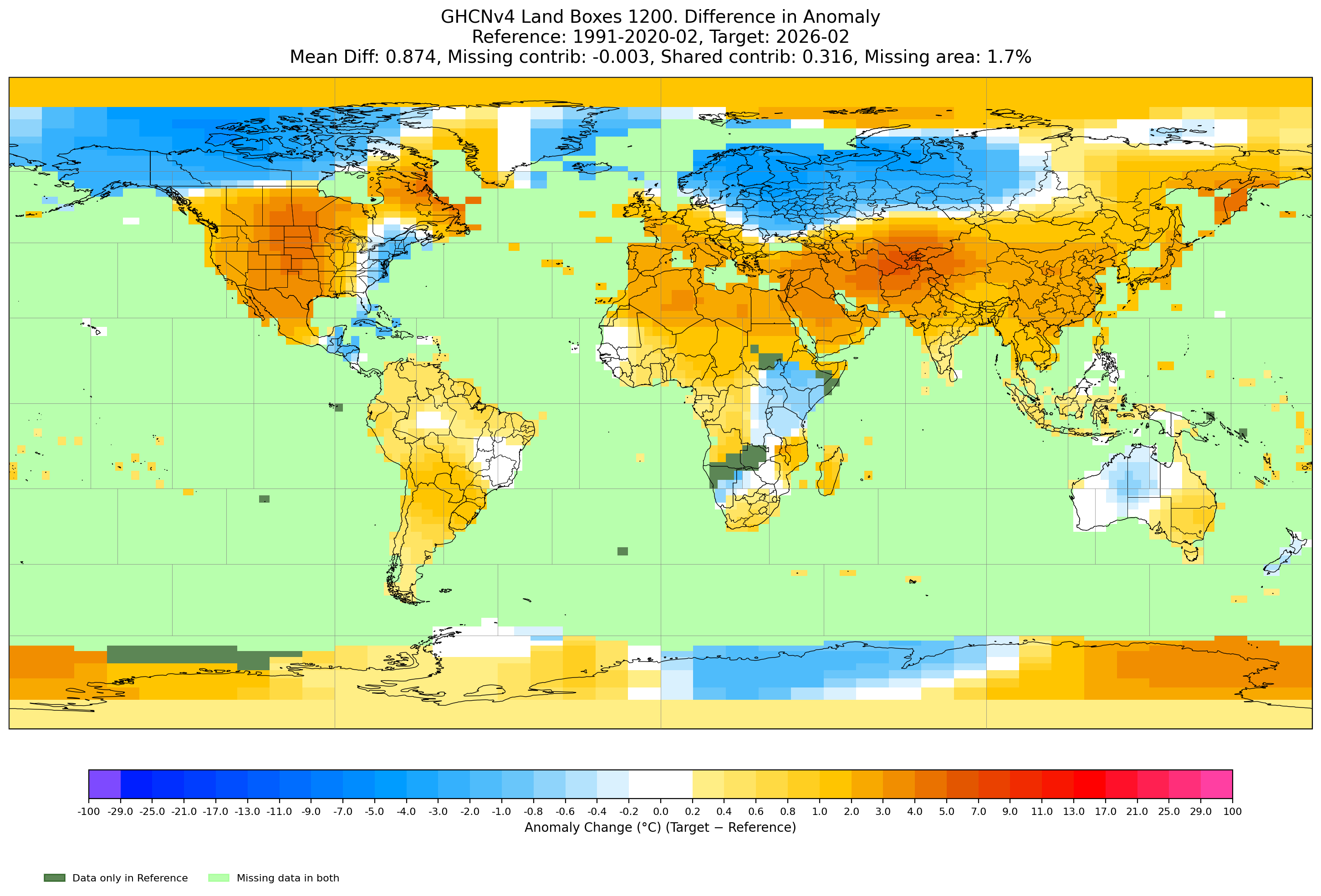
I am surprised Australia actually warmed (I suppose the shear number of stations from SE australia had a lot more influence than I expected and the rest of the cold stations didn't end up matching ERA5). A couple stations in NW Alaska that got added brought down the infilled anomaly over the Artic down enough to save me. 😰
In hindsight, I should have hedged the last couple days in 1.25-1.30 given how close it was, especially after my judgement from Mar. 6th ago didn't pan out. I think we are locked in now for the currently scheduled release date, and they'll likely use last night's ghcnm so it will be 1.24.
Overall looks like missing Russian data and Greenland's western coast really biased it high this time relative to ERA5. Don't have another guess other than homogenization why Australia ended up so warm relative to ERA5.
Only a very few new stations, but that's not what caused the change in the latest run...
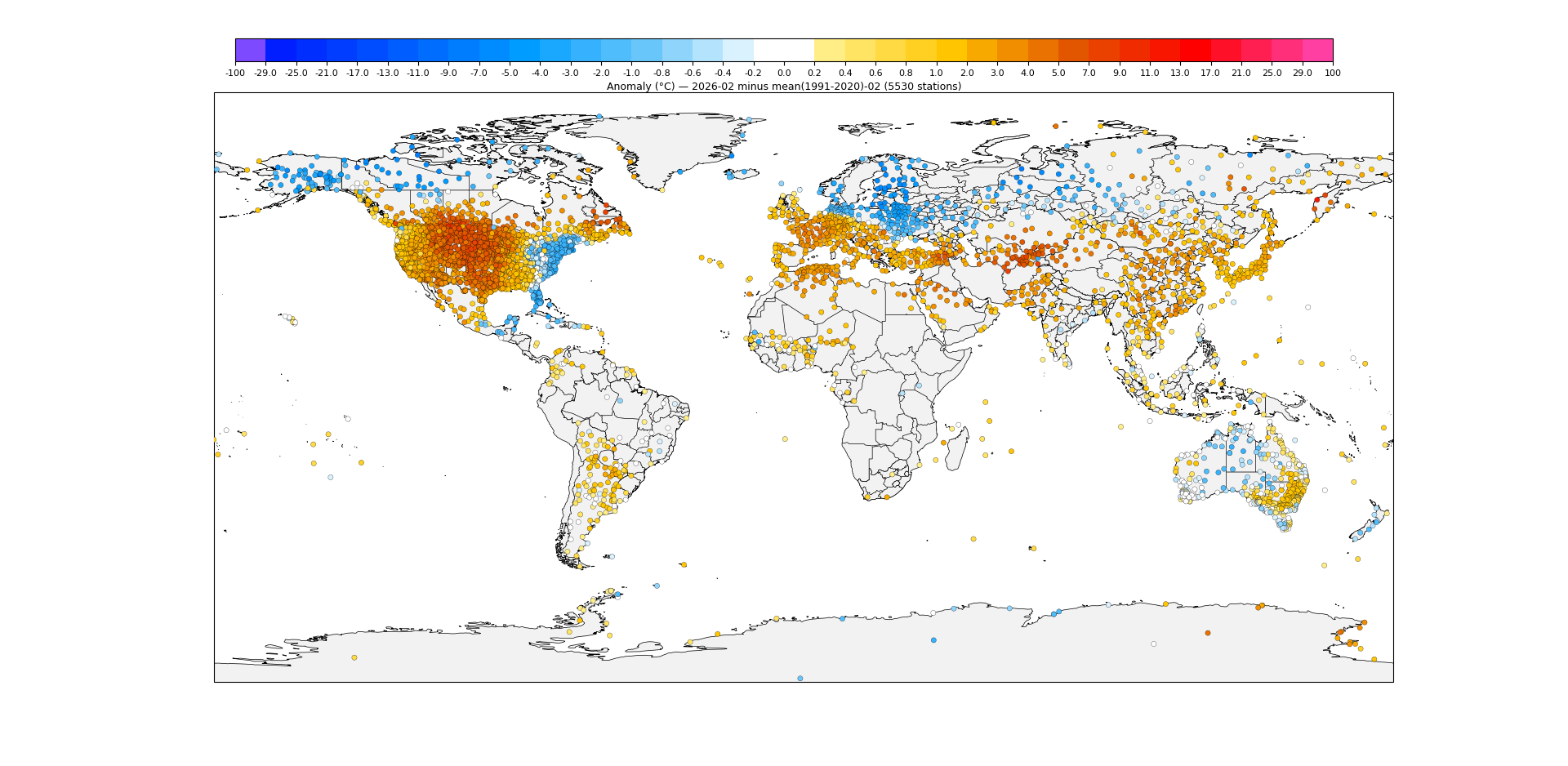
ghcnm.v4.0.1.20260309:
125.15
(excluding Narjan Mar, since it is still not flagged).
LYM00062259 increased by 9 C. Station has a spotty record and it looks too hot relative to ERA5; +5.3 C beyond last 30 year range.
Elev. (m): 261.0, Station: LYM00062259, Name: TAZERBO
LAT/LON: 25.80/ 21.13, Value: 25.20, Anomaly: 8.00, Last30yrs -> mean: 16.23, min: 14.35, max: 19.90, std: 1.68 EXCEEDS 30-yr RANGE BY +5.30°C
It doesn't show up in the chart below since its so spotty and I require 5 years to calculate the rebased anomaly for the station, but it shows up in the gistemp landboxes below... not going to rerun without it since I doubt they'll use today's ghcnm.
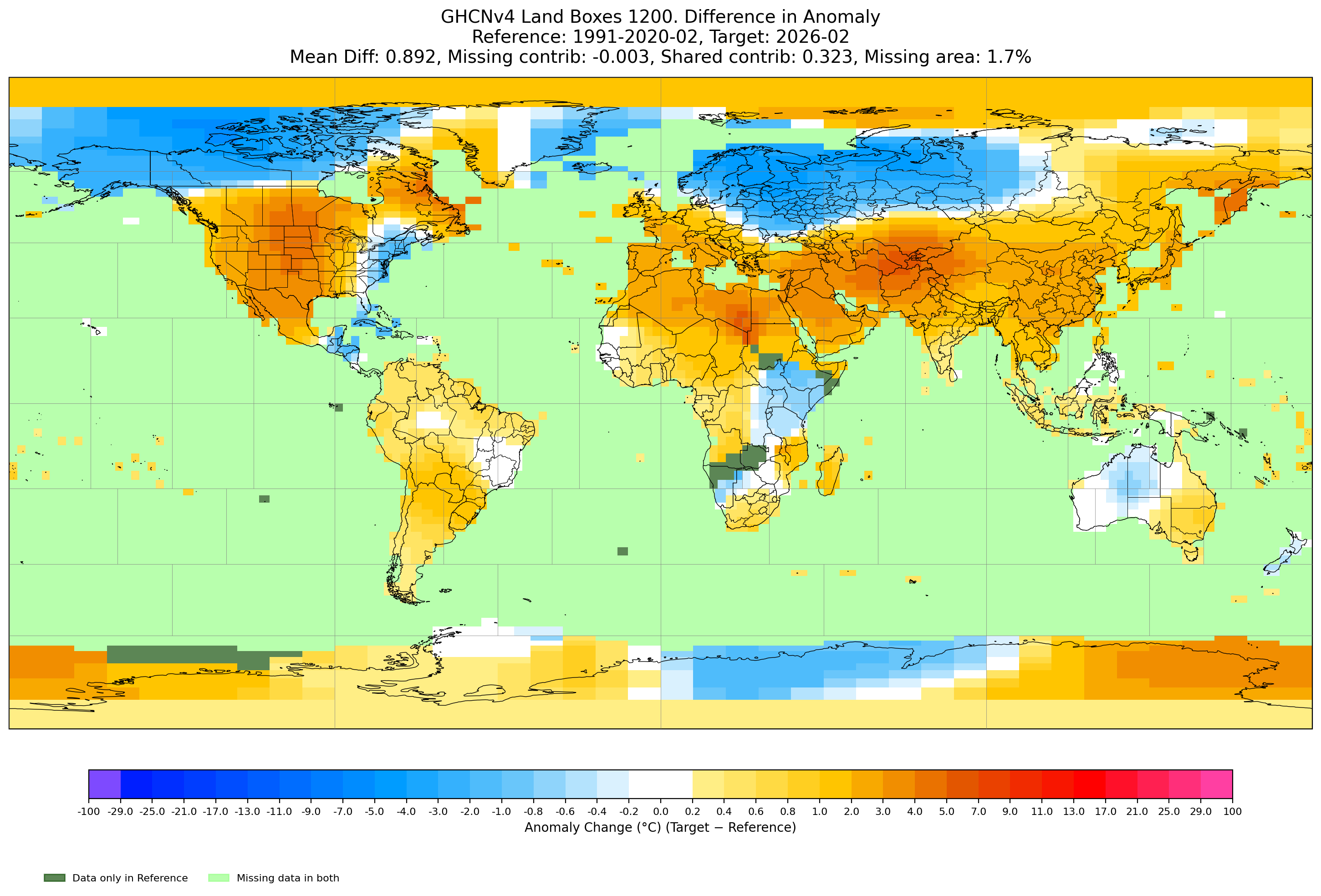
@parhizj Do we know for certain if Narjan Mar will be excluded? Why are we so sure they won't use today's GHCN-M?
@aenews I have no communication with them, but they've excluded it in the past and it has been clearly erroneous for days now. I would say >95% they exclude it. 5% some chance random rounding error in difference between my ERSSTv5 SBBX format and theirs, and general sensibility prevents me from bidding it up further than 90%.
@parhizj Well, if they happen to use today's GHCN then it would be 1.25 whether or not it is excluded. With yesterday's, it is 1.25 w/o exclusion and 1.24 w/ exclusion. Is there a reason why we are confident they'll use yesterday's GHCN-M?
@aenews I did go back in a previous market and try to count based on my comments when I tried to mark the ghcnm version (its incomplete since I wasn't rigorous) but it suggests they'll go with the ghcnm from the 8th day. Last year for February 2025 data they used the 8th also.

Also, whether it would round up to 1.25 today if we exclude the Libya station I doubt -- by visual inspection roughly the same number of subboxes have increased as decreased by about the same amount as a result of the change from yesterday's ghcnm run and since its only roughly +4 decreased, 4 increased, the net change should be < 0.001 C.
Luckily manifold has not yet deleted my thousands of comments even for old markets... can see it here:
https://manifold.markets/ChristopherRandles/global-average-temperature-february#a8c0um63uus
@aenews They did indeed use the March 8 ghcnm:
ghcnm.tavg.v4.0.1.20260308.qcf.dat 2026-03-09 03:24 165M