In my LessWrong essay "Nectome: All That I Know", I make the claim: "Most cryonics clients wait over a day between legal death and being cryopreserved." This is hard to check, but might be possible to verify at some point in the future. This market will resolve YES if there is strong evidence that a majority of people who were cryopreserved before 2026 spent at least 24 hours after legal death but before having their remains vitrified at cryogenic temperatures. It will resolve NO if there is strong evidence that a majority were cryopreserved with less than a day's wait time. I won't resolve until there is clear, unambiguous evidence about how it should resolve. I also won't bet.
 1,000
1,000People are also trading
You may need to be more specific about the specific definition of "vitrified at cryogenic temperatures".
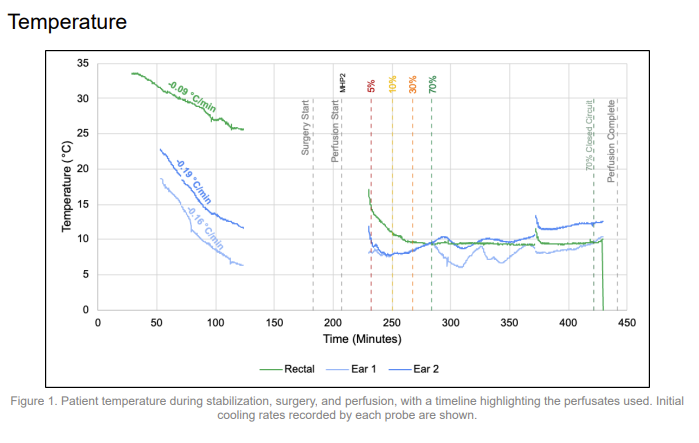
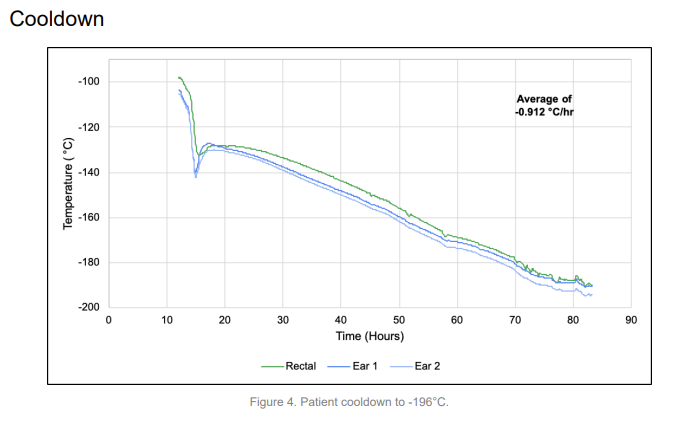
In Tomorrow Bio's latest case report you can see the timeline:
T=(0) cardiopulmonary arrest
(135 minutes = 2 hours) pronounced dead
(3.5h) transfered to Tomorrow Bio's ambulance
(4.5h) ambulance battery ran out of power ☠
(6h) ambulance power is back on
(7h) surgery + perfusion started
(11h) perfusion complete
(???) patient placed on dry ice, transported to European Biostasis Foundation, I think this included an ambulance driving from Germany to Switzerland
(???) patient received and prepared for cooldown to cryogenic temperatures
(???) CT scan performed at −80°C
(???) rapid cooldown to temperatures above the glass transition temperature
("15h" in 2nd graph) slow, gradual cooldown from above the glass transition temperature to cryogenic temperatures. (I am not sure if this is 15h after heart stopped, 15h after arrival at ambulance, or 15h after arrival at EBF (which would be 25h-28h after heart stopped)
("80h" in 2nd graph) CT scan performed at −196°C
(85h ish) patient was carefully transferred in a storage pod to a long-term storage dewar.
this timeline, which seems standard for Tomorrow Bio's cases, should probably count as <24h if the "15h" here is measured from heart stop, and if "vitrified" refers to the moment at which the body reached the -130C zone