
The green house in this picture is similar to mine, located about a mile and a half away from where I live, at the same elevation (near the top of a mountain, around 1400 ft.) My house is about 1600 sq. feet.
I have four 4090 GPUs iterating upon various hyperparameters of stock and cryptocurrency trading models. I spend two hours every morning validating the previous night's model runs and deciding up on new designs and parameters for the next 22 hours of runs. This has continued for 100 different models so far.
Additionally, there are other computers with terabytes of RAM that have CPUs consuming an additional 2kW of power to hyperopt traditional rules-based models and to run inference on the neural networks in production trading.
Since Christmas, I have used the air conditioner to keep temperatures below 78 degrees. Before then, there was a period where I was able to open the windows to vent the heat. In November, there was a cold snap where I closed all the windows and the temperature reached 70.
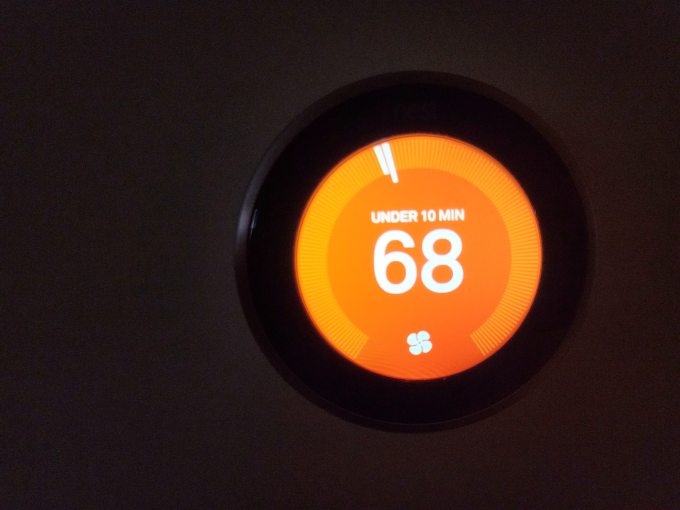
The Nest thermostat is set to turn on the heat if the house falls below 68 degrees, which has not yet occurred this winter. As the coldest day traditionally falls between January 15 and 20, the winter is already one-third over.
This house shows just how much energy is needed to train and run inference on even the most basic of models and should serve as a sign that those who predict "AI doom" might want to be more realistic about real-world constraints.
Before I trained models, the last morning I needed to use the heat typically occurred between May 15 and June 5. Will I turn on the heat for at least one second before July 1, 2024?
Added a comment to address a message I received. This market could resolve due to a number of factors, all of which should be considered in your betting:
The weather could be cold
I could go bankrupt and shut down the business
There could be little snow at all
The models could need more GPUs to be purchased to allow us to continue (they currently earn about 50% APY, but we need 75% before July)
Google could lower its pricing, actually making it competitive to train online
RESOLUTION: The heat turned on at 8:29am on January 14, 2024. Therefore, this market resolves to YES.
There were two causes. First, snow squalls caused 50mph winds, which led to a lot of heat being lost even though the temperature had only fallen to 26 degrees.
Second, a lesson about machine learning is that creating the models is easy. It only took a year to get the best model up to an accuracy of 89.08%, far exceeding the 80% I was able to find in any papers on the subject. But it still isn't running in production, because we haven't been able to get the code to stop having deadlocks while using the trading APIs from Alpaca. We are also working on parallelism and shared memory because we don't have the money to buy better servers.
Ultimately, what caused this market to resolve to YES is that I had to stop the GPUs temporarily because we are stuck on engineering problems. For those @EliezerYudkowsky supporters, the reason there will not be "foom" is because of these engineering challenges. GPT-4 is an example of this - OpenAI's interface has constant bugs and it costs a lot to run, and the GPT store took a year to release.
 1,000
1,000🏅 Top traders
| # | Trader | Total profit |
|---|---|---|
| 1 | Ṁ32 | |
| 2 | Ṁ16 | |
| 3 | Ṁ10 | |
| 4 | Ṁ9 | |
| 5 | Ṁ7 |
UPDATE: The winds are forecast to gust to 50 today, and temperatures will fall from 26 to the first single-digit reading so far (finally.)
The indoors is holding at 67.9 degrees even with the traditional CPUs hyperopting away today on a new job and 3 of the 4 GPUs in full-on training runs. It's not looking good for the NO bidders.
UPDATE: Astonishingly, it has not dropped below 20 degrees yet this winter. The coldest it got was 69 degrees. Snow is finally forecast, and once the snowpack is established, that should result in a lower likliehood of needing to heat the house.
However, counter to that, one of the paradoxes of machine learning is that designing models is easy, but getting the infrastructure working is far harder. We have a model that has an AUC of 0.93 and is 91% precise at predicting 6% rises in stock prices one day out, but have so far been unable to get it running in production due to crashes, out of memory errors, needing to reduce disk space usage, needing to reduce API calls due to paying for the lowest tier of service, and so on. It's possible that in two weeks we might actually need to stop training because these other things are so difficult that they become too much of a bottleneck.
@HanchiSun I haven't posted my own address. This is a similar house.
But whether I want it to be private or not, my address can easily be located with a simple search, as I am involved in many cryptocurrency lawsuits.