YES if, by August 31, there is a consensus in credible reporting or within the academic community that at least one of the core arguments or main theorems in OpenAI's "Ten Advances" is fatally flawed or incorrect. Otherwise, resolves NO.
"Flawed" means a core mathematical or theoretical error is identified that invalidates the main result of the paper, and the error is either unfixable or difficult to patch.
Nitpicks—such as minor typos, formatting errors, minor translation gaps in the Lean formalization that do not undermine the mathematical proof's validity, or easily patchable edge cases—do not count toward a YES resolution.
 1,000
1,000🏅 Top traders
| # | Trader | Total profit |
|---|---|---|
| 1 | Ṁ422 | |
| 2 | Ṁ310 | |
| 3 | Ṁ255 | |
| 4 | Ṁ65 | |
| 5 | Ṁ55 |
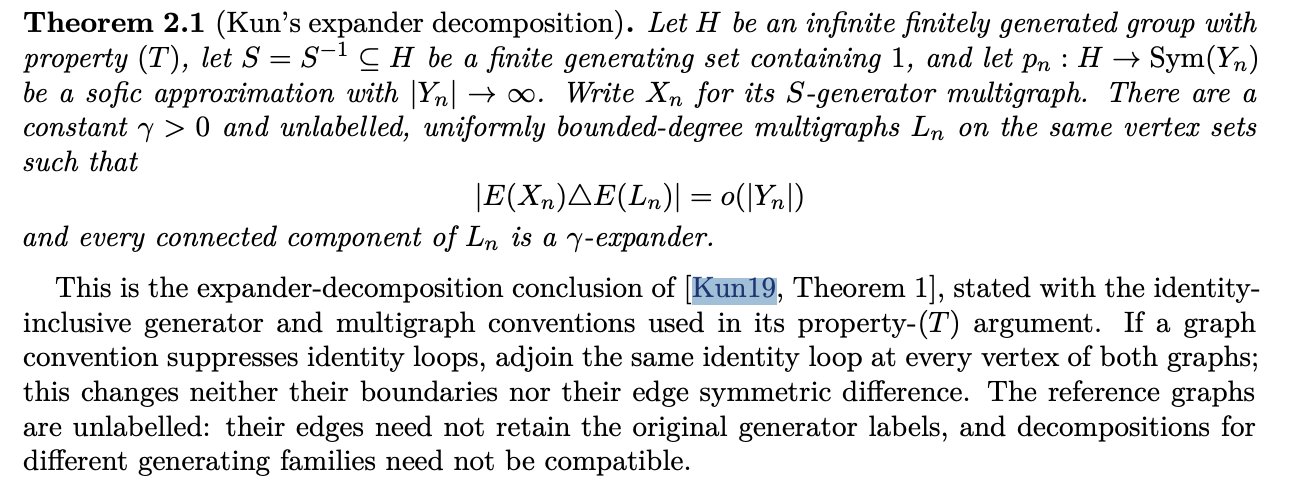
the nonsofic group result is suspect (although I'm not enough of an expert to say whether the claimed result is still true or not) because one of the results in the cited papers happens to be false
Другая планета (@nihilunbounded) on X
@duck_master yea seems slightly more credible than the other one? I have absolutely zero ability to assess for myself, but plenty of time in the rest of the month for this to shake out