Links:
Self-Portrait as Saint Catherine of Alexandria - Artemesia Gentileschi
Estimate: USD 2,500,000 – USD 3,500,000
A Roman marble statue of Narcissus
Estimate: USD 250,000 – USD 350,000
The Gentileschi painting has 10x the pre-auction estimate value as the Roman statue. Thus, I will multiply the sale price of the Roman status by 10x to make the comparison fair.
Resolution: This resolves to the higher value between: (1) [Gentileschi sale price] & (2) [Roman statue sale price] * 10.
Resolution details
Example from a past auction: this painting by Gentilesch has a "price realised" of USD 982,800. This is the equivalent number I will use—whatever is displayed by the auction page.
Note that the final listed sale price typically includes the buyer's premium (and potentially other fees).
Edge cases:
If one is pulled before it is put up for auction, resolves N/A.
If one goes up for auction but fails to sell for any reason, it resolves to the other.
If there's a tie or they both fail to sell, both resolve at 50%.
Self-Portrait as Saint Catherine of Alexandria - Artemesia Gentileschi
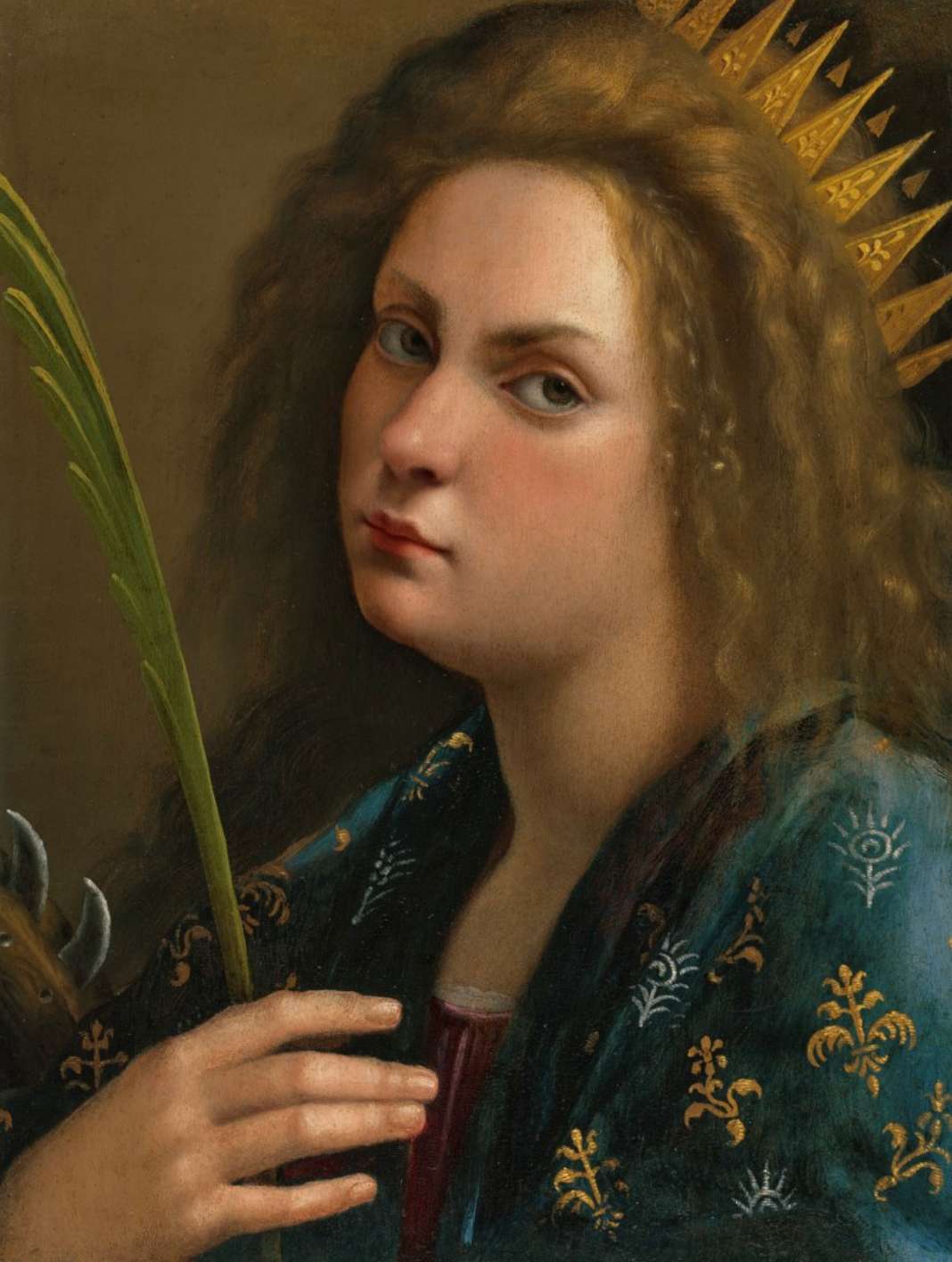
In this intimate picture on panel, Artemisia paints herself in the guise of the fourth-century saint Catherine of Alexandria. She holds a martyr’s palm, wears a crown and embroidered cloak denoting Catherine’s royal status, and is accompanied by a broken wheel studded with iron spikes – symbol of the saint’s martyrdom and her standard attribute in art. Her right hand, delicately holding the palm frond, is raised to her chest. Artemisia’s head occupies most of the picture space, drawing the viewer into a close and intimate encounter, and the tight crop further focuses our attention on her resolute expression. (Lot essay)
A Roman marble statue of Narcissus
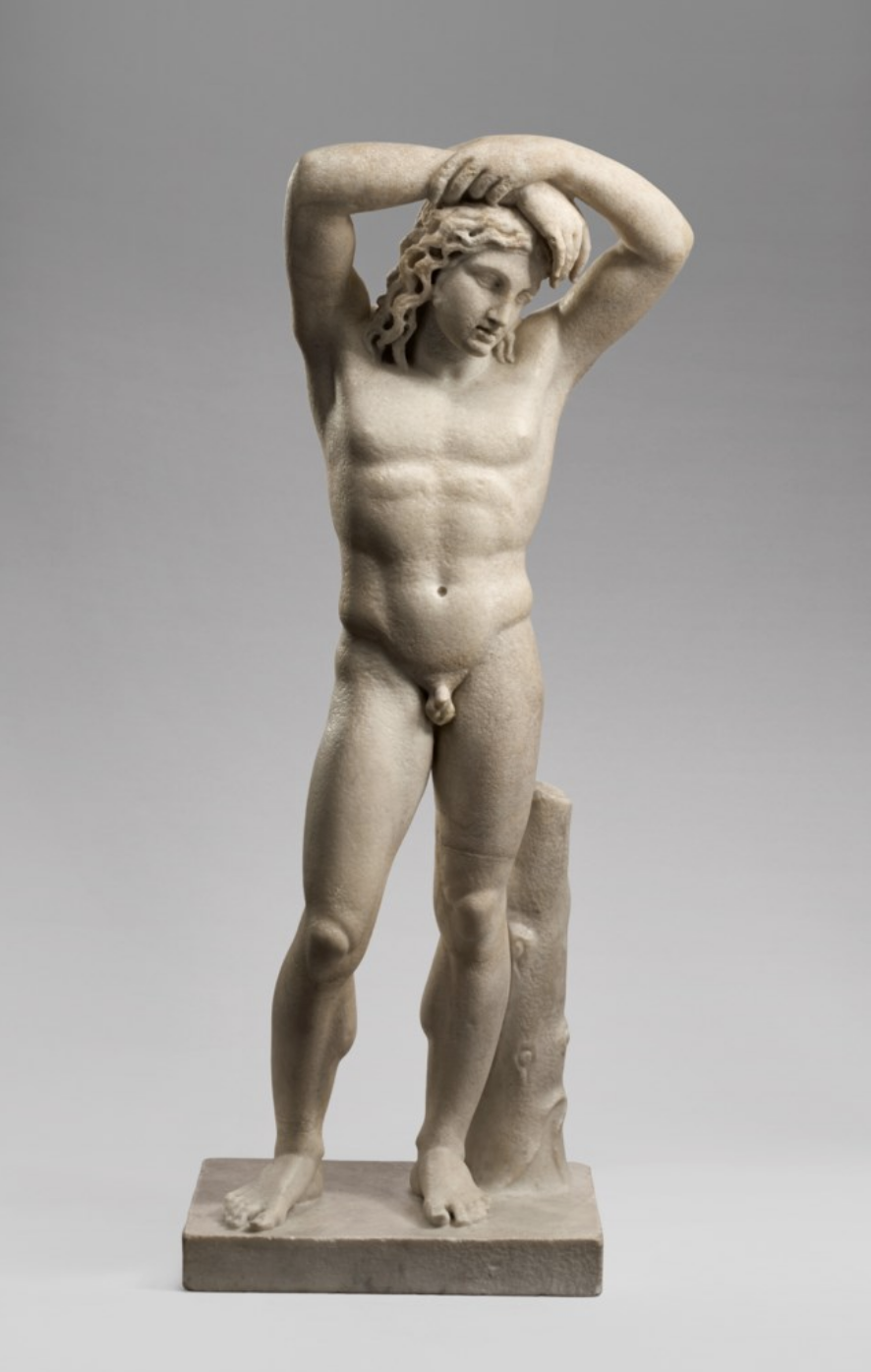
This splendid depiction of Narcissus shows the youth standing in contrapposto, his weight on his left leg and his right at ease. He is depicted nude, standing with his arms over his head, with his right hand clasping his left wrist. He looks down and to his left with his long, luxurious locks falling onto his shoulders. A support in the form of a tree trunk abuts the back of his left leg and a mortice is present on his right shoulder, likely to accommodate the inclusion of a now-missing separately-made figure of Eros. The statue was expertly resorted in the 18th-19th century, including the base and tree trunk support along with the lower part of the left leg from the knee down; the right leg from below the hip; the genitalia and parts of the buttocks; some small areas to the upper right arm and shoulder and to the left elbow and shoulder; the fingers of the right hand; the crown of the head; and to areas of the nose, lips, chin and left eye. (Lot essay)
 1,000
1,000